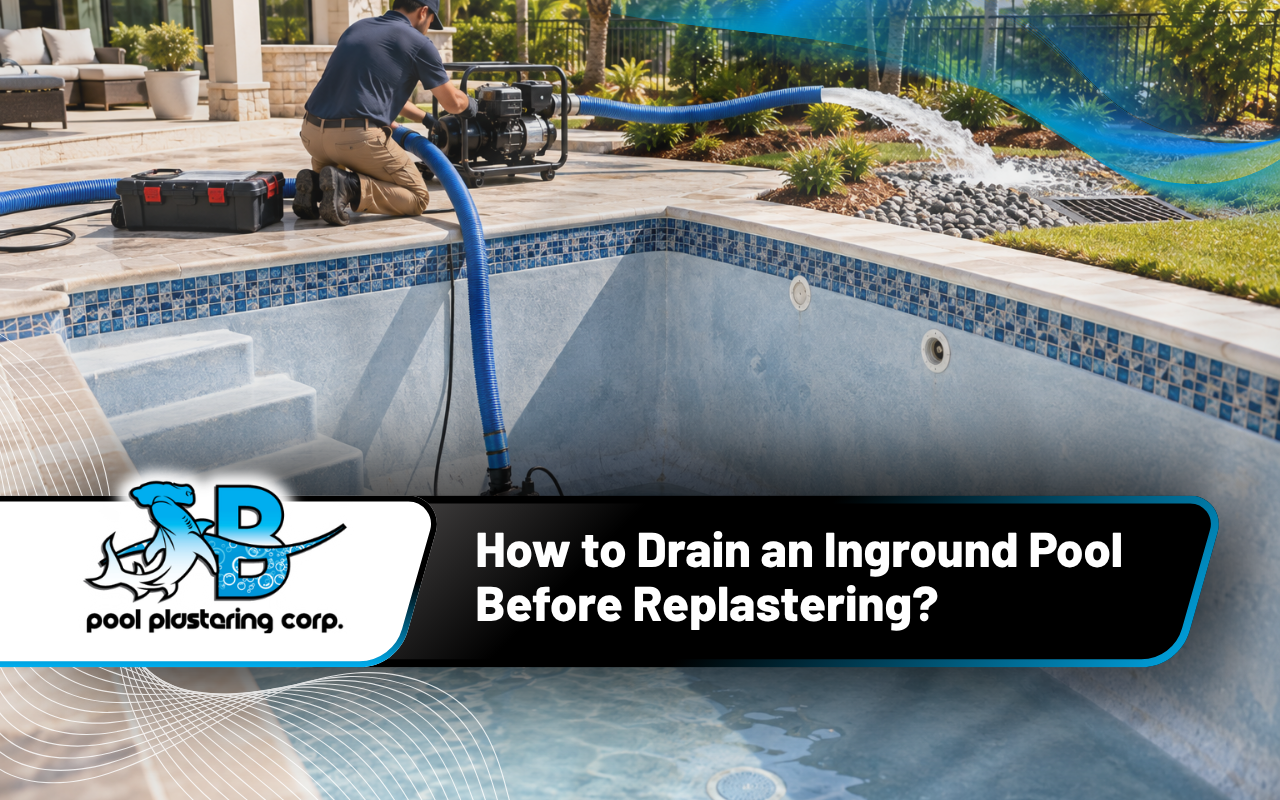
How to Drain an Inground Pool Before Replastering?
- Check the pool type, groundwater conditions, and weather before draining.
- Confirm the approved discharge route and arrange the work and refill.
- Use suitable pumping equipment under supervision; stop for leaks, movement, or unsafe discharge.
- Learning how to drain an inground pool starts with deciding whether emptying it is appropriate.
Removing thousands of gallons needs more planning than attaching a hose. At JB Pool Plastering, we recommend arranging the surface work before lowering the water. Start with our pool replastering project timeline so draining fits the project rather than leaving the shell empty without a clear next step.
Pool draining is the controlled removal of water for work that cannot happen underwater, such as replastering. Homeowners considering a surface renewal need a plan for discharge, equipment, and refilling. The goal is to expose the finish while limiting risks to the pool, nearby buildings, and the surrounding ground.
Planning How to Drain an Inground Pool Safely
Emptying a pool is appropriate only when the planned work requires it and the site conditions allow it. Ordinary dirt or a chemistry problem does not automatically justify a full drain. We recommend checking the pool material and repair scope before choosing equipment.
For pool replastering in Riverside CA, confirm the preparation date before water removal begins. Concrete, fiberglass, and vinyl pools need different precautions. A method suitable for one pool may damage another. Do not use a full drain as routine cleaning.
If you ask how do you drain an inground swimming pool, start with the reason for draining. A contractor should assess the shell and groundwater concerns first. Keep people and pets outside the work area, and make sure the pool barrier remains secure throughout the project.
Choosing Approved Discharge Routes Protects Nearby Homes and Water
The answer to where should you drain pool water depends on the water quality and the authority responsible for discharge. A sewer connection, street drain, or yard is not automatically acceptable. Confirm permission and any water testing requirements before routing the hose.
The City of Riverside Sewer FAQ describes conditional discharge options and requires permission for certain sanitary sewer discharges. Verify the current instructions for your address. County guidance and city guidance may differ, especially when another agency operates the sewer. Approval applies to the actual discharge route. At JB Pool Plastering, we recommend confirming the rules before connecting a discharge hose.
- Ask which agency controls the receiving sewer or drainage system.
- Confirm required chlorine, salt, and other water quality conditions.
- Check permitted flow rates and protect against sewer backups.
- Keep discharge away from the pool foundation and neighboring property.
Do not assume that waiting a few days makes every pool safe to discharge. Salt and other dissolved materials remain even when chlorine falls.
Reviewing Weather and Groundwater Reduces Risks Before Water Removal
Recent rain, wet soil, and known groundwater issues can make draining unsafe even on a sunny day. The pool water provides weight against pressure from below. Removing that weight can expose the shell to uplift, so a dry forecast alone is insufficient.
PEGroup Consulting Engineers explains that groundwater pressure can lift an empty pool. We keep this concern separate from the pumping procedure: groundwater assessment comes before draining. Discuss known drainage problems and movement history with the contractor. Our pool uplift causes and prevention guide explains the separate structural risk. Never operate relief valves or remove drain covers without qualified guidance.
Choose a work window that also limits prolonged sun exposure to the empty finish. Avoid starting immediately before a delay in the repair schedule. At JB Pool Plastering, we recommend resolving discharge access and refill arrangements before the project reaches the water removal stage.
Supervising Pumping Helps Control Water Removal and Equipment Safety
A suitable pump removes water through a secured hose to the approved destination. The operator monitors water levels, discharge conditions, and equipment throughout the job. Pump capacity must suit the receiving system, rather than simply moving water as quickly as possible.
- Isolate pool equipment according to the project plan.
- Use pumping equipment rated for the job and protected electrical connections.
- Place a submersible pump in the water as its manufacturer directs.
- Check the hose, outlet, and surrounding area while pumping.
- Stop before the pump runs dry or the receiving system backs up.
A submersible pump is not positioned outside the pool for normal submerged operation. Likewise, many pool circulation systems cannot empty a pool safely. Follow the equipment instructions. If groundwater enters or movement appears, stop work and seek qualified help instead of trying repeated drain-and-refill cycles.
Coordinating Surface Work Keeps Refilling Connected to the Project
A draining plan should lead directly into the approved inspection or surface work, followed by the correct refill procedure. Fresh plaster requires its own startup directions. The refill schedule must come from the finish instructions and project team, rather than a general waiting period.
When discussing the project with JB Pool Plastering, share the pool type, approximate size, planned work, and any drainage restrictions. Ask who handles pumping and when the crew expects to begin preparation. Keep responsibilities clear so water removal does not start before the job is ready.
After surface work, review our water care after replastering for the next stage. Avoid brushing or adding chemicals during filling unless the finish instructions call for it. Use the specific startup plan to protect the new surface and determine when swimming can resume.
Frequently Asked Questions
Should you drain a pool before replastering begins onsite?
Yes, conventional replastering needs access to the empty interior. The contractor should coordinate draining with preparation and finish application. Our replastering schedule and work stages explains the broader project timing without treating the empty period as a fixed number of days.
Can a pool remain empty while supplies are delayed?
Avoid planning an open-ended empty period. Exposure and groundwater risks depend on the pool and site. If supplies or labor are delayed, ask the contractor whether draining should also wait. The safest schedule connects water removal with work that is actually ready.
Will replastering preparation require replacing all my pool equipment?
Replacing the interior finish does not automatically require a new pump, filter, or heater. The project scope should identify any separate equipment concerns. For Riverside interior finish options, discuss existing equipment and access before agreeing to additional work.
Is clear pool water automatically safe for landscape discharge?
No. Clear water can still contain chlorine, salt, or other chemicals that harm plants or violate discharge rules. Check water quality and local requirements. Also consider the ground’s capacity to absorb water without flooding or increasing moisture around the pool shell.
Where can I review water care after surface replacement?
Our post-replaster water balance guidance covers the stage after refilling. Follow the instructions for your chosen finish, record test results, and clarify who manages startup. A new interior needs coordinated water care rather than the same treatment used before the renovation.
Preparing Your Drain Plan Supports a Smoother Surface Renewal
Before deciding how to drain an inground pool, confirm the work scope, discharge route, and refill responsibilities. With JB Pool Plastering, you can discuss the surface project and identify questions to resolve before draining. Bring photos, pool dimensions, and any known drainage history. Discuss your pool project to plan the next step around your pool’s actual condition.
References
Subscribe to Download Pool Maintenance 101 Guide
Fill the Form and Start Taking Care of Your Pool




Contact Us Now
Get Your Pool Quote!