How to Balance Pool Water After Replaster Correctly?
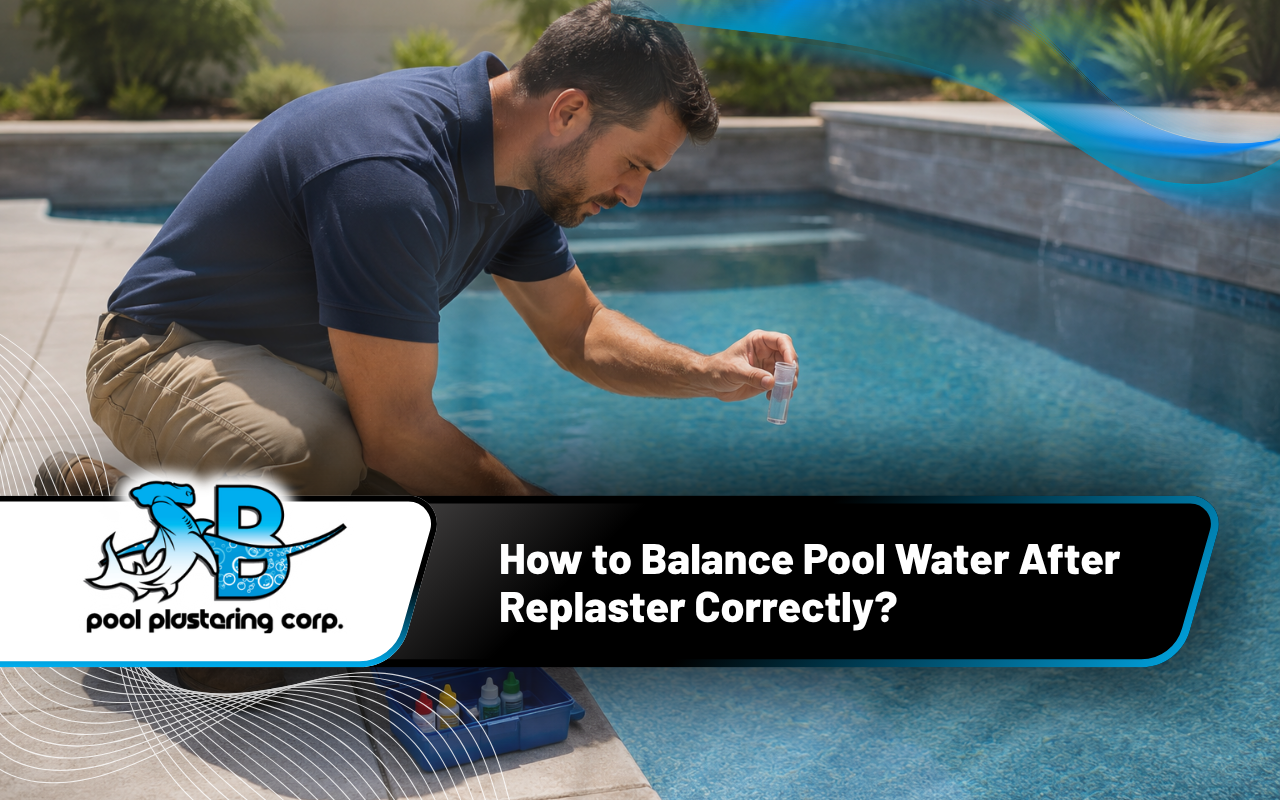
Learning how to balance pool water after replaster starts with daily testing, steady circulation, and gradual chemical changes. First, balance alkalinity and pH. Next, manage calcium and sanitizer carefully. Always follow the finish manufacturer’s instructions because startup needs can vary.
How to Balance Pool Water After Replaster Correctly?
How to balance pool water after replaster means controlling water chemistry while the fresh surface cures. Pool owners need this process after refilling a resurfaced pool. It prevents scaling, staining, rough areas, and early surface damage. Moreover, correct startup care prepares the water for safe, comfortable swimming.
Protect Fresh Plaster Through Careful Water Chemistry Control
Fresh plaster stays vulnerable while curing because water can pull minerals from the surface or leave deposits behind. Therefore, steady circulation, brushing, testing, and controlled chemical changes protect the finish. A careful startup also reduces cloudiness, stains, scale, and uneven color.
The National Plasterers Council says a new interior finish is especially open to staining, scaling, and discoloration during the first 28 days of initial startup care. Consequently, early maintenance should never be rushed.
At JB Pool Plastering, we recommend keeping the pool full, circulating the water, and brushing as directed. Additionally, avoid swimming until the water is balanced and sanitized.
Careful new plaster pool water chemistry helps prevent two opposite problems. Aggressive water can etch the finish. Meanwhile, scale-forming water can create rough deposits and cloudy areas.
Stabilize pH and Alkalinity Before Adding Other Chemicals
Total alkalinity helps hold pH steady, so it should usually be checked before major pH changes. Then, adjust each level slowly. Small corrections reduce the risk of overshooting the target and creating aggressive or scale-forming water around the fresh plaster.
Use these practical checks during startup:
- Test the fill water before making chemical changes.
- Keep the circulation system running during adjustments.
- Add one chemical at a time.
- Allow each product to mix before retesting.
- Record every reading and chemical addition.
The CDC recommends keeping pool pH between 7.0 and 7.8 for pool water. However, many plaster startup plans use a narrower working range. Therefore, follow the installer’s startup instructions.
Managing pH after pool replaster in California may require frequent attention. Heat, evaporation, source water, and fresh plaster can all affect readings. Therefore, test before adding acid or an increaser.
Key Takeaway: Fresh plaster needs steady water balance during early curing. Therefore, stabilize alkalinity and pH through small, measured adjustments.
Select Startup Chemicals in the Safest Practical Order
Startup chemicals should be selected from actual test results, not from guesswork. First, review alkalinity and pH. Next, check calcium hardness. Then, introduce sanitizer according to the approved startup plan. This order supports steady water without sudden chemical swings.
Common startup chemicals after replaster may include:
- An alkalinity increaser when total alkalinity is low.
- A pH reducer or increaser when testing shows a need.
- Calcium chloride when calcium hardness is too low.
- Chlorine added gradually at the approved startup stage.
- A metal control product when the fill water contains metals.
JB Pool Plastering checks the pool finish, fill water, equipment, and startup instructions before recommending adjustments. Therefore, owners receive guidance based on their pool instead of a fixed chemical recipe.
Never mix pool chemicals together. Additionally, never add water directly into a container of chemical. Follow every product label and use the correct protective equipment.
Test New Pool Water Daily During Early Curing
Daily testing shows how fresh plaster changes the water during curing. Therefore, test pH, alkalinity, calcium hardness, and sanitizer consistently. A written log reveals trends, supports accurate adjustments, and helps prevent repeated corrections that waste chemicals or stress the surface.
Use a liquid test kit or reliable digital tester when possible. Test strips can support quick checks. However, they may provide less detail during a sensitive startup.
The CDC advises residential pool owners to test chlorine and pH at least twice each day during regular pool care. During plaster startup, follow the testing schedule provided by your installer.
Write down these details after every test:
- The date and testing time.
- The pH and total alkalinity readings.
- The calcium hardness result.
- The sanitizer reading.
- Each chemical and amount added.
- Any cloudiness, dust, stains, or rough areas.
For continued care after startup, review our Simple Pool Maintenance Guide.
Key Takeaway: Choose chemicals from measured results and add them gradually. Meanwhile, detailed daily records make water changes easier to understand.
Manage Calcium and Chlorine Without Harming New Plaster
Calcium protects plaster when the level suits the finish and fill water. Meanwhile, chlorine controls germs after the approved introduction point. Both chemicals need gradual adjustment because concentrated products or sudden changes can stain, bleach, scale, or weaken fresh surfaces.
JB Pool Plastering advises owners to confirm the finish maker’s requirements before adding calcium, chlorine, stabilizer, salt, or specialty products. Different finishes may follow different startup timelines.
| Water Condition | Possible Effect | Helpful Next Step |
|---|---|---|
| Calcium is too low | Water may pull calcium from fresh plaster. | Confirm the reading and raise calcium gradually when approved. |
| Calcium is too high | Scale or cloudy water may develop. | Review fill water, pH, and professional treatment options. |
| Chlorine is added too strongly | The new surface may discolor or bleach. | Follow the approved startup schedule and avoid direct contact. |
| Chlorine remains too low | Algae and sanitation problems may begin. | Test the water and adjust sanitizer as the startup plan allows. |
The CDC recommends at least 1 ppm free chlorine in swimming pools. However, new plaster may require a staged introduction. Therefore, the finish instructions should guide timing.
Resolve Common Water Problems Before Surface Damage Spreads
Cloudiness, plaster dust, stains, scale, or fast pH movement often signal an early water imbalance. Therefore, test before treating the symptom. Correcting the cause quickly protects the finish and avoids unnecessary chemicals that may create a second problem.
Use this decision guide:
- Cloudy water: Check circulation, filtration, pH, and calcium before adding a clarifier.
- Rising pH: Confirm alkalinity, then use a measured correction when approved.
- White dust: Brush the surface and keep filtration running.
- Rough deposits: Test pH and calcium before attempting scale treatment.
- Colored stains: Test for metals and avoid applying random stain products.
- Green water: Check sanitizer, circulation, and filtration immediately.
Do not use a wheeled cleaner while plaster dust remains. The National Plasterers Council notes that these cleaners should wait until balance is reached and cloudiness clears, which often takes seven to ten days after filling.
Owners planning a pool replaster in Fontana, CA can review our Pool Re-Plaster Services in Fontana. We can explain finish options, startup needs, and ongoing care.
Key Takeaway: Calcium and chlorine need controlled introduction. Additionally, early testing helps identify the true cause of cloudiness, stains, dust, or scale.
Frequently Asked Questions
How do I know when my replastered pool is balanced?
Your pool is balanced when test results remain within the approved startup ranges and the water looks clear. The surface should also feel smooth and show no scale or stains. Review our Simple Pool Maintenance Guide for ongoing testing steps.
When should I add chlorine after pool replastering?
Add chlorine according to the installer’s or finish manufacturer’s startup plan. Some finishes need a gradual introduction. Therefore, avoid pouring concentrated chlorine directly onto the plaster. Contact the project team when the approved timing is unclear.
What happens if the new pool pH stays high?
High pH can reduce chlorine performance and encourage calcium deposits. First, test total alkalinity. Then, make a small pH correction with the pump running. Retest before adding more product.
Why is my replastered pool cloudy after filling?
Cloudiness may come from plaster dust, high pH, calcium imbalance, or weak filtration. Brush the pool, run the filter, and test the water. Avoid adding several products before identifying the cause.
How do I choose between resurfacing and replastering?
The right option depends on surface wear, cracks, stains, roughness, and the existing finish. Our Pool Resurfacing and Replastering Comparison explains the main differences and decision factors.
Preserve Your New Finish With Consistent Professional Guidance
Correct startup care protects the appearance and service life of fresh plaster. JB Pool Plastering can inspect your pool, explain the next steps, and guide safe water adjustments. Therefore, use our Contact Our Pool Team page to request professional support.
References
Subscribe to Download Pool Maintenance 101 Guide
Fill the Form and Start Taking Care of Your Pool




Contact Us Now
Get Your Pool Quote!