What Determines How Long Does Pool Replastering Take?
Backyard swim plans can pause when rough plaster scratches feet or shows stains. Homeowners often want a realistic schedule before draining any water. For a local next step, review our Rancho Cucamonga Pool Surface Details and compare your pool’s condition.
What Determines How Long Does Pool Replastering Take?
Most residential pool replastering takes about two to three weeks from inspection to safe swimming. Demolition, repairs, plaster type, curing, refill, and water balancing all matter. The answer to how long does pool replastering take changes when weather, pool size, or hidden damage slows one stage.
Pool replastering removes worn interior material, repairs the shell when needed, and applies a fresh finish. Homeowners need it when plaster feels rough, flakes, stains, or develops cracks. The project also includes water start-up care, which helps the pool feel smoother and easier to maintain.
Key Stages Explain How Long Does Pool Replastering Take
The timeline depends on preparation, old plaster removal, surface repairs, application, curing, refill, and water balancing. Many residential pools take around two to three weeks. However, hidden damage and finish choice can change the plan.
During the early review at JB Pool Plastering, we look for rough patches, hollow areas, cracking, and chemistry damage. A pool replastering service in Rancho Cucamonga, CA should also consider local heat, access, water disposal, and cure conditions.
- Inspection and planning: check plaster wear, cracks, waterline tile, and access.
- Draining and protection: empty the pool safely and cover nearby areas.
- Removal and repairs: expose the shell and fix visible concerns.
- Finish and start-up: apply plaster, refill, brush, and balance water.
Customers asking how long does pool replastering take should expect each stage to depend on the last. Because of that, we explain the schedule before work begins. We also point out concerns that may affect timing.
Pool Replastering Steps Explained Clearly Support Better Planning
Clear steps help homeowners see why pool resurfacing is not a one-day task. Each phase prepares the next surface layer. As a result, new plaster can bond correctly, cure evenly, and avoid early flaws after filling.
Before work begins, our team at JB Pool Plastering will explain what should be removed, protected, repaired, or replaced. For larger backyard changes, our Pool Construction Planning Guide can help you understand how deeper pool work affects scheduling.
- Drain the pool: remove water and protect nearby surfaces.
- Chip or blast old plaster: clear weak material from the shell.
- Repair visible damage: address cracks, voids, and rough areas.
- Apply the finish: trowel the new plaster evenly.
- Start the water: refill carefully and begin balanced start-up care.
These pool replastering steps explained in order help prevent skipped details. They also help homeowners plan for noise, access, dust, and the short period when the pool cannot be used.
Curing Protects New Plaster Before Swimming Resumes Safely
Curing is the period when fresh plaster hardens, hydrates, and becomes ready for balanced water use. This stage should never be shortened. New pool plaster can stain, scale, or weaken when water chemistry and brushing are ignored.
Many homeowners ask how many days pool plaster needs to cure because the pool may look ready early. The National Plasterers Council notes that the interior finish is especially vulnerable to staining, scaling, and discoloration during the first 28 days.
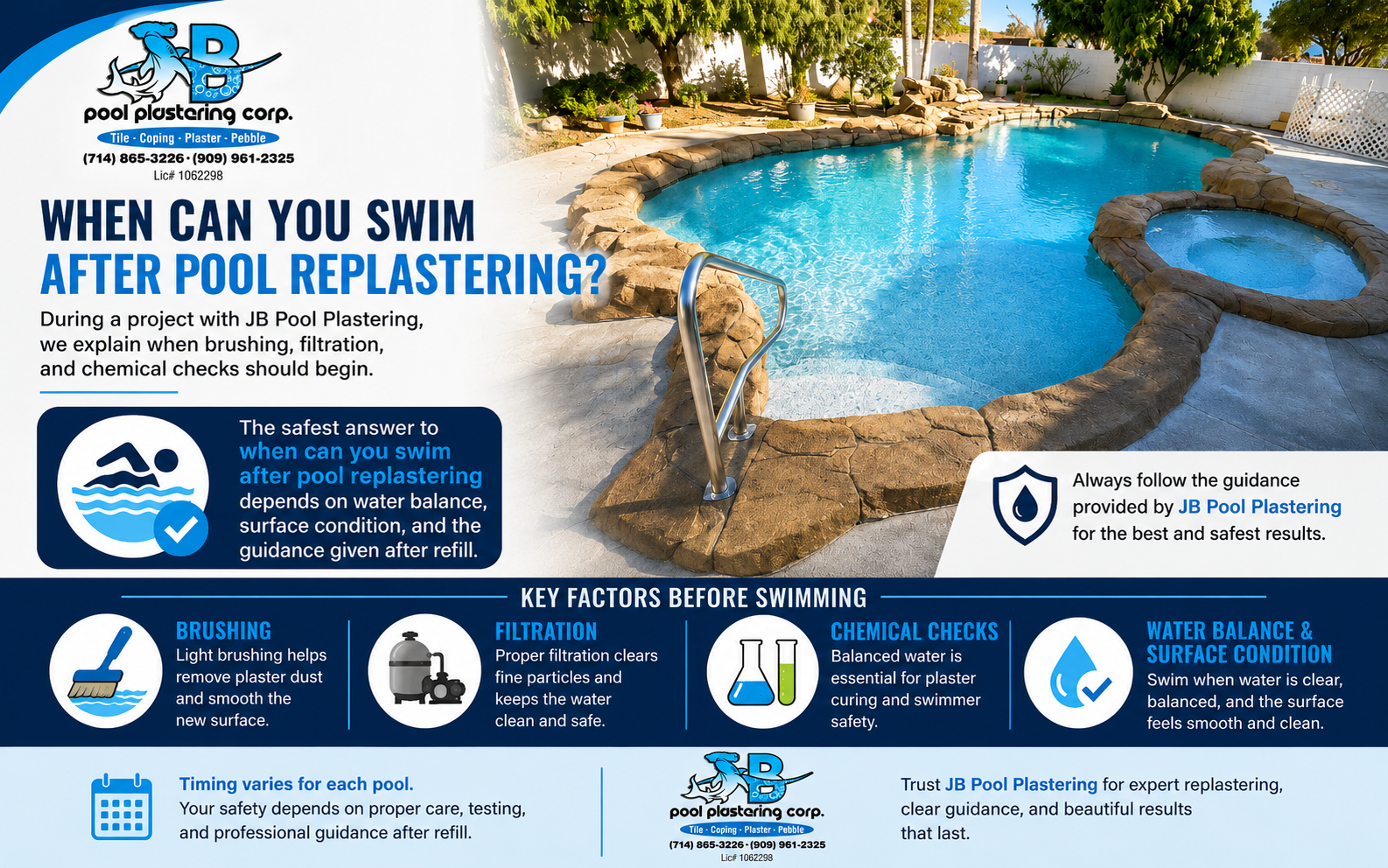
During a project with JB Pool Plastering, we explain when brushing, filtration, and chemical checks should begin. The safest answer to when can you swim after pool replastering depends on water balance, surface condition, and the guidance given after refill.
Booking Prepares Your Rancho Cucamonga Pool Project Correctly
Booking starts with details that help us understand the pool before anyone drains it. We ask about rough areas, stains, cracking, finish preference, access, and recent water problems. Then we explain the next practical step.
When customers contact JB Pool Plastering, we ask for photos, the pool location, known repair concerns, and finish preference. You can begin through Contact Our Pool Team so we can review your project details.
- Send recent photos: show steps, walls, stains, tile, and cracks.
- Share access details: note gates, slopes, and tight work areas.
- Discuss finish goals: compare color, texture, and maintenance needs.
- Review start-up care: understand brushing, filling, and water checks.
After booking, we prepare the work plan around the pool’s condition and the chosen finish. Clear information helps reduce surprises. It also helps you plan outdoor space, pets, and family use around the project.
Maintenance Preserves New Pool Plaster After The Refill
Good aftercare protects the fresh finish after the pool is full and clear. Brushing, filtration, and careful water balancing help reduce plaster dust. These habits also protect surface color and support a smoother finish during the first weeks.
With JB Pool Plastering, you get clear start-up guidance before the pool returns to normal use. The CDC explains that proper free chlorine and pH help protect swimmers. That is one reason water balancing matters before regular swimming begins.
After the project, regular care should include brushing, testing, filtration, and fast correction of cloudy water. Our Pool Plaster Maintenance Tips explain simple habits that help protect the new surface longer.
Frequently Asked Questions
How long does the replastering schedule usually take?
Most residential projects take about two to three weeks from inspection to safe swimming. The final timeline depends on pool size, old plaster removal, repairs, finish type, curing, refill speed, and water balancing. Weather or hidden shell damage may add extra time.
When can you swim after pool replastering safely?
Swimming should wait until the pool is filled, filtered, brushed, balanced, and cleared for use. Some pools may be ready sooner than others. Still, safe swimming depends on the finish and water chemistry. Start with Contact Our Pool Team for project-specific guidance.
What can delay a fresh pool plaster project?
Common delays include deep cracks, hollow plaster, tile issues, access limits, weather, water disposal rules, and finish availability. A local inspection can help spot these concerns early. Our Rancho Cucamonga Pool Surface Details explain surface signs to review first.
Should plaster care continue after the pool refills?
Yes, early care matters after refill because new plaster can still be sensitive. Brushing, filtration, and water testing help reduce plaster dust and surface problems. Use our Pool Plaster Maintenance Tips to plan simple aftercare habits.
Which finish choice affects the replastering timeline most?
Traditional plaster, quartz, and pebble finishes can each affect surface preparation, application, texture, and start-up care. Finish choice should match comfort, appearance, and maintenance goals. During planning, compare the look, feel, and care needs before choosing the surface.
Start Your Replastering Schedule With Clear Local Guidance Today
Planning early helps you understand timing, curing, access, and safe swimming expectations before work begins. If your pool feels rough, stained, or worn, use Contact Our Pool Team to share your project details and get clear next steps for a smoother pool surface.
References
Subscribe to Download Pool Maintenance 101 Guide
Fill the Form and Start Taking Care of Your Pool




Contact Us Now
Get Your Pool Quote!