
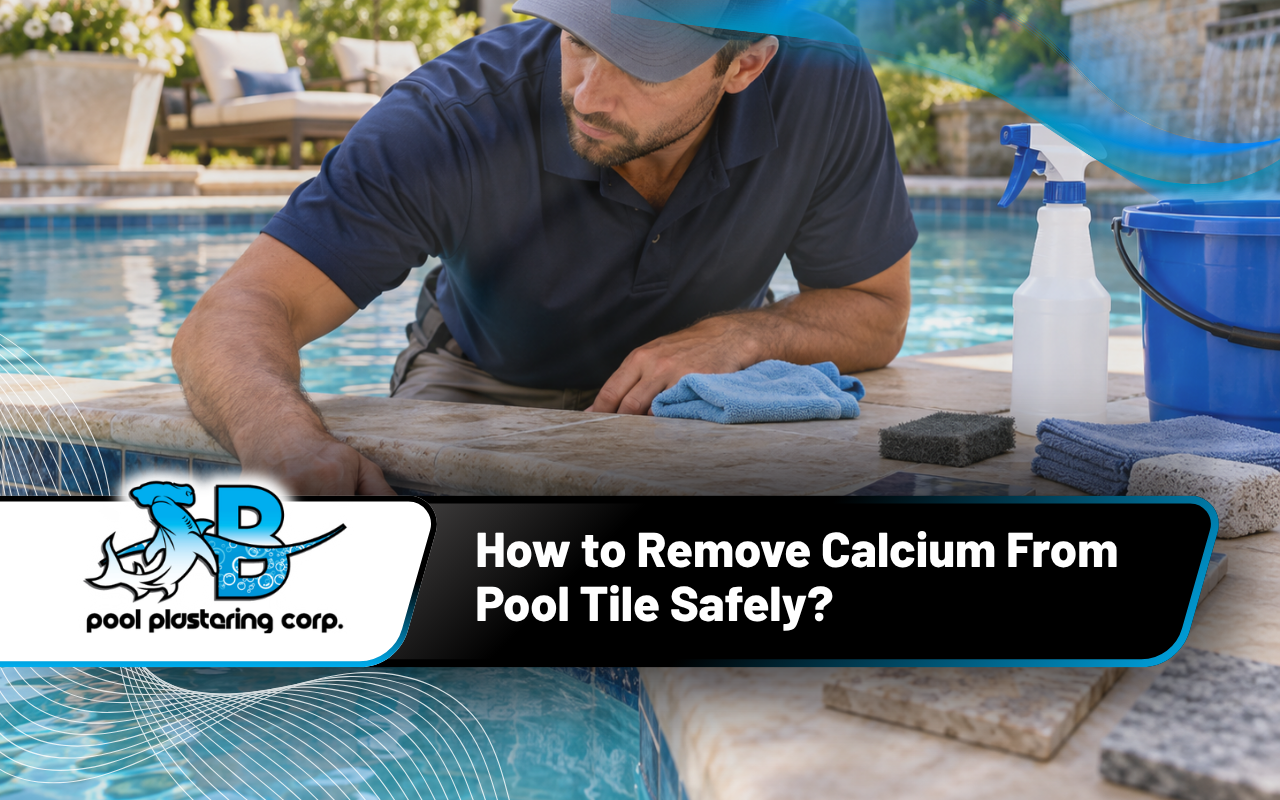
How to Remove Calcium From Pool Tile Safely?
A white waterline crust can resist routine brushing, but stronger chemicals are not always the right answer. At JB Pool Plastering, we recommend matching cleaning to the tile and deposit. Compare mineral buildup with our guide to pool discoloration before treating a mark that might involve another material or cause.
Waterline cleaning targets deposits attached to tile near the water surface. Pool owners need it when a rough mineral ring remains after normal care. The work involves identifying the surface, choosing a compatible cleaning method, and correcting contributing water conditions so removal does not damage the tile or grout.
Identifying Calcium Deposits on Pool Tile Guides Safer Cleaning
Calcium deposits can form as minerals remain after water evaporates or fall out of water under scale-forming conditions. Similar-looking rings can contain other salts and residue. We inspect the location, texture, and tile material before suggesting treatment, rather than diagnosing the deposit from color alone.
AQUA Magazine’s Just Above The Waterline explains that evaporation residue can contain several materials. Therefore, a white crust does not automatically prove one specific mineral. Identify the surface before the chemical. Glass, glazed ceramic, and natural stone may react differently to acid or abrasion.
Also check whether nearby grout or coping is already weak. Our coping damage and repair guide can help distinguish a cleaning concern from failing surrounding materials. At JB Pool Plastering, we recommend noting loose tile, missing grout, and damaged edges before planning any aggressive removal.
Comparing Carbonate and Silicate Avoids Guessing From Appearance Alone
The comparison of calcium carbonate vs calcium silicate scale matters because deposits may respond differently to treatment. However, appearance and a home acid test cannot reliably identify every deposit. Failure to dissolve can reflect thickness, mixed minerals, or other material rather than proving silicate.
| Observation | What it may indicate | Practical next step |
|---|---|---|
| Thin chalky ring | Mineral residue, often including carbonate | Begin with approved gentle cleaning |
| Dense hard crust | Older or mixed deposits | Assess material compatibility before stronger treatment |
| Loose grout beneath crust | A separate surface defect | Review repairs before cleaning |
| No response to cleaner | Resistant deposit or unsuitable product | Stop and reassess rather than increasing strength |
We do not recommend escalating acid concentration until something happens. A failed test is a reason to reassess. Thick crust may need specialist cleaning. Take close photos and keep the tile product information, if available. Those details are more useful than an unsupported mineral diagnosis.
Selecting How to Remove Calcium From Pool Tile Methods
The best starting method combines the least abrasive suitable tool with a surface-approved cleaner. Product instructions and tile guidance determine the contact time and rinse method. A small test patch should show whether the process removes buildup without changing the tile finish or grout.
- Use a soft or suitable nylon brush for initial cleaning.
- Choose a product specifically compatible with the tile and grout.
- Protect adjacent stone and finishes from splash or runoff.
- Test a hidden area and inspect it after rinsing.
- Stop if the tile scratches, loses gloss, or the grout softens.
Avoid wire brushes, aggressive grinding, and narrow pressure jets without qualified guidance. Pumice can scratch some tile, especially glass, and is not a universal tool. Do not mix cleaning chemicals. With JB Pool Plastering, you can discuss whether surface damage needs attention before the waterline receives more treatment.
Balancing Water and Brushing Slows Recurring Waterline Mineral Deposits
Preventing another waterline ring requires attention to both water conditions and evaporation residue. A balanced saturation index helps manage scale-forming water, but it does not eliminate every deposit above the water. Regular compatible brushing remains useful because evaporation can leave minerals even in balanced water.
AQUA Magazine’s Scale Does Tile An Injustice discusses checking temperature, pH, calcium hardness, and alkalinity together. When considering how to prevent scale on pool waterline surfaces, we recommend looking at the complete water test rather than adjusting one reading blindly. Lowering pH alone is not a full prevention plan.
Use reliable measurements before deciding on water replacement or treatment. Our pool water testing limitations explains why observations cannot replace a full chemistry test. Avoid over-softening fill water without evaluating the finish requirements. Water that stops scale can still become aggressive toward cement-based pool surfaces.
Reviewing Tile Condition Keeps Cleaning Separate From Interior Replacement
A cleaning review should establish whether deposits, damaged tile, failing grout, or the interior finish are the main concern. Removing waterline buildup does not automatically require replastering. Likewise, renewing plaster does not by itself fix calcium deposits on otherwise sound waterline tile.
For pool tile cleaning in Rancho Cucamonga CA, share clear photos and the tile material when known. During a project discussion with JB Pool Plastering, explain which products have already been used and whether the buildup keeps returning. Keep a record of previous treatment to avoid repeating an unsuccessful approach.
If the interior also needs renewal, review our Rancho Cucamonga replastering options as a separate decision. Ask which parts of the proposed scope cover cleaning, tile repair, and the pool finish. That distinction helps you compare recommendations without turning a local waterline issue into unnecessary whole-pool work.
Frequently Asked Questions
Can vinegar safely remove buildup from every pool tile?
No. A mild acid can still harm acid-sensitive stone, grout, or particular finishes. Follow the tile and cleaner instructions, and test compatibility first. Do not assume that a household product is harmless because its ingredients are familiar or its smell seems mild.
Will cleaning waterline tile also remove dark plaster stains?
Not necessarily. Tile deposits and plaster discoloration involve different surfaces and sometimes different causes. Our interior stain identification guide helps explain that distinction. Describe each affected area separately so a cleaning recommendation does not treat all pool marks as the same problem.
Should loose coping be fixed before mineral removal begins?
Loose or cracked coping needs a separate review, especially if cleaning would expose weak joints to water or chemicals. See our coping repair planning advice. Stabilizing damaged surrounding materials can be more important than improving the appearance of nearby mineral deposits.
Does stubborn scale mean my whole pool needs replastering?
No. A stubborn tile ring alone does not show that the interior finish has failed. Consider local pool finish renewal only when the plaster condition supports that decision. Assess tile, grout, and interior finish separately before combining them into one renovation.
Why can deposits return despite apparently acceptable pH readings?
The ring may reflect evaporation residue, calcium levels, alkalinity, temperature, or several factors together. A single pH result cannot describe the whole water balance. Keep dated test records and inspect where deposits form so the next cleaning plan addresses the actual recurring pattern.
Choosing Compatible Cleaning Preserves Tile While Addressing Mineral Buildup
If you are deciding how to remove calcium from pool tile, start with the material and condition rather than the strongest cleaner. With JB Pool Plastering, you can discuss photos, prior treatment, and any related surface damage. Discuss your waterline concerns to separate compatible cleaning options from repairs or interior renewal your pool may also need.
References
Subscribe to Download Pool Maintenance 101 Guide
Fill the Form and Start Taking Care of Your Pool




Contact Us Now
Get Your Pool Quote!