How Can Pool Coping Repair Restore Safer Pool Edges?
Small shifts around your pool can turn into sharp edges, loose stones, and water damage. When the coping starts moving or cracking, the poolside area may feel less safe and look worn. Careful inspection and timely repair can help protect the edge, improve the look, and keep the space ready for everyday use.
How Can Pool Coping Repair Restore Safer Pool Edges?
Pool coping repair restores loose, cracked, or shifted pool edges by resetting stones, sealing gaps, and protecting the bond between the pool and deck. The right repair helps improve safety, reduce water entry, and refresh the finished look around your pool.
Pool coping repair is the process of fixing the cap or border where the pool shell meets the surrounding deck. Homeowners need this service when coping stones move, edges crack, or water reaches weak joints. The repair solves safety, appearance, and moisture problems before they spread.
Early Coping Checks Prevent Bigger Poolside Damage Problems
Regular coping checks help you spot small edge problems before they affect the pool structure. Loose joints, open gaps, and uneven stones can let water reach hidden areas. Early action keeps repairs more focused and helps protect the poolside surface.
Walk around the pool slowly and look where the coping meets the deck. Press gently on stones that seem uneven. If a stone moves, sounds hollow, or sits higher than nearby pieces, the bond may already be weak.
At JB Pool Plastering, we look for visible damage and nearby movement before recommending a repair path. This helps us decide if the area needs patching, resetting, or a deeper review.
- Check for open joints between coping pieces.
- Look for chipped corners or raised stone edges.
- Watch for dirt collecting in new gaps.
- Notice water sitting near the pool border.
According to the CDC, swimming areas can carry injury risks when safety issues are ignored. A smooth, stable edge helps make the pool area easier to use and maintain.
Loose Coping Stones Create Safety And Water Concerns
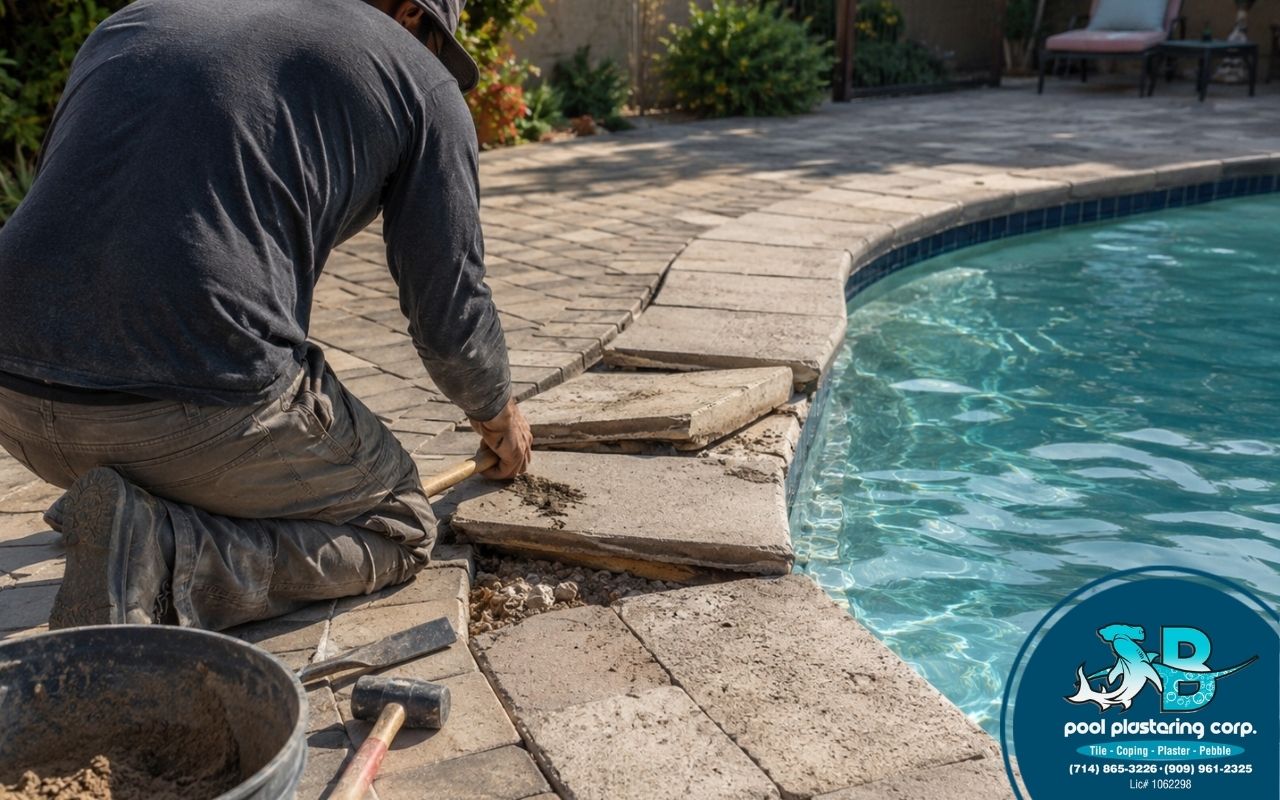
Loose coping stones are more than a cosmetic concern because they can shift under foot pressure. Movement can create trip points, open joints, and paths for water. Resetting loose pieces helps restore a safer and cleaner pool edge.
Stones can loosen because old mortar breaks down, water reaches the base, or the deck pushes against the coping. Once the stone moves, the gap often grows. As a result, small movement can become a larger repair.
When customers contact JB Pool Plastering, we ask what they noticed first. Photos can help us understand whether the stone is loose, cracked, missing mortar, or affected by nearby deck movement.
- Repair may work when the stone is intact and stable after resetting.
- Replacement may be better when the stone is broken or badly worn.
- Further inspection may be needed when several stones move together.
Loose coping stones should not be ignored because the same gap can allow water, debris, and movement to keep weakening the edge.
Cracked Pool Edges Signal Repair Needs Before Spreading
Cracked pool edges often start as thin lines, but water can make the damage worse. Repairing cracks early helps protect the coping, mortar, and nearby surface. The best next step depends on crack size, depth, and location.
Hairline cracks may need cleaning, filling, and sealing with pool-safe repair materials. Wider cracks may require removing the damaged section. If several cracks follow the same line, pool deck movement may be part of the problem.
With JB Pool Plastering, you get clear guidance before work begins. We explain whether the crack looks like surface wear, failed mortar, or a sign that the coping has shifted.
Cracked pool edges can become easier to repair when they are addressed before water reaches the base below the coping.
Pool Deck Movement Affects Coping Alignment And Stability
Pool deck movement can push, lift, or separate coping pieces over time. Concrete and other deck surfaces can move with moisture, soil changes, and temperature shifts. Repair should consider the deck area, not only the visible coping stone.
The American Concrete Institute explains that joints help allow movement between concrete sections. Around pools, missing or damaged joint space can place pressure near the coping. That pressure may lead to cracks, raised edges, or loose stones.
During a visit with JB Pool Plastering, our team checks the surrounding deck, visible joints, and coping alignment. This step helps us avoid treating only the surface while missing the cause.
Common movement signs include:
- One coping section sitting higher than another.
- Gaps forming between deck and coping.
- Cracks running from the deck toward the pool edge.
- Several stones shifting in the same direction.
Stable alignment matters because coping protects the pool edge and helps create a finished walking surface.
Correct Materials Support Durable Pool Coping Repair Results
The right repair material should match the coping type, pool conditions, and outdoor exposure. Stone, precast concrete, mortar, adhesive, and sealers must work together. A good match improves appearance and helps the repair handle normal use.
Natural stone can give a classic look, while precast concrete can offer a more even shape. The texture should also matter. Wet pool edges need a surface that does not feel slick under normal use.
By choosing JB Pool Plastering, you can review material choices that fit your current pool border. We look at color, thickness, texture, and the way each piece meets the deck.
- Natural stone can blend well with older pool areas.
- Precast concrete can create a clean and uniform edge.
- Pool-safe mortar helps secure stones in wet environments.
- Penetrating sealer can help reduce water entry after curing.
For broader upgrade planning, our Pool Renovation Services page explains how larger pool updates can improve both function and appearance.
Our Contact Process Keeps Repair Steps Clear For Homeowners
A clear repair process helps homeowners understand what happens before, during, and after service. The first step is sharing the visible problem. Then we review the coping, explain options, and prepare the repair area carefully.
Before work begins, we check the damaged area and nearby deck conditions. We also ask about recent changes, such as new cracks, loose stones, or water collecting around the pool edge.
Our usual process includes:
- Review the concern through a call, message, or photos.
- Inspect the coping area and nearby deck movement signs.
- Explain repair options based on damage and materials.
- Prepare the surface by clearing debris and weak mortar.
- Complete the repair with proper setting, leveling, and finishing.
Once the service is complete, we help you understand care steps. This may include avoiding pressure on fresh repairs, watching for new movement, and keeping joints clean.
To start the conversation, visit our Contact page and share what you see around the pool edge.
Frequently Asked Questions
How do I know if my pool coping needs repair?
You may need repair if stones move, joints open, mortar crumbles, or cracks spread along the edge. A review can show whether the issue is surface wear or deeper movement. For larger updates, see our Pool Remodeling page.
When should I fix loose coping stones?
Loose stones should be fixed as soon as you notice movement. Waiting can let water and debris enter the gap. Fast repair can help reduce trip risks and protect nearby coping pieces.
What happens if cracked pool edges are ignored?
Cracked pool edges can widen when water enters the opening or the deck keeps moving. Over time, the repair may involve more than filling a crack. Early attention helps protect the pool border.
Why is pool deck movement important during repairs?
Pool deck movement can push against the coping and cause repeated cracking or shifting. A repair should include a look at the deck, joints, and nearby gaps. This helps address the cause, not only the visible damage.
Can coping repair be part of a resurfacing project?
Yes, coping repair can be reviewed during a resurfacing or renovation project. This helps align surface updates with edge repairs. Learn more on our Understanding the Pool Resurfacing Process page.
Helpful Repair Guidance Protects Your Poolside Investment Longer
A safe pool edge starts with clear inspection, honest repair guidance, and materials that fit the pool. If you see loose stones, cracks, or shifting near the deck, contact us through our Contact page so we can help you plan the next step.
References
Guidelines for Healthy and Safe Swimming
Difference between a contraction joint, isolation joint, expansion joint, construction joint, and a cold joint
Subscribe to Download Pool Maintenance 101 Guide
Fill the Form and Start Taking Care of Your Pool




Contact Us Now
Get Your Pool Quote!