How Can You Test Pool Water Without a Kit
Keeping pool water in good shape can feel hard without test tools. Still, simple checks can reveal early changes. At JB Pool Plastering, we know quick observations help you act sooner. As a result, you can protect your plaster, support safer swimming, and plan the next step with more confidence.

How Can You Test Pool Water Without a Kit
At JB Pool Plastering, we often remind pool owners that simple checks can reveal a lot. Although home methods are not exact, they can still show when your water needs attention. Therefore, learning How to Test Pool Water Without a Kit helps you spot trouble early and protect your finish before small changes grow into repairs.

Spot Early Water Changes With Simple Home Checks
You can start with items already in your kitchen. For example, use a clear cup, white vinegar, baking soda, distilled water, red cabbage, and a white plate. These tools will not replace full testing. However, they can give you a helpful first look.
- Use a clear container to inspect cloudiness and color.
- Use red cabbage water for a rough pH reading.
- Use baking soda and vinegar to notice balance shifts.
- Use a white object to judge deep-end clarity.
At JB Pool Plastering, we suggest using these checks after storms, heavy use, or long quiet weeks. That way, you can notice issues before they harm plaster or equipment.

Use Red Cabbage Water To Review Pool pH
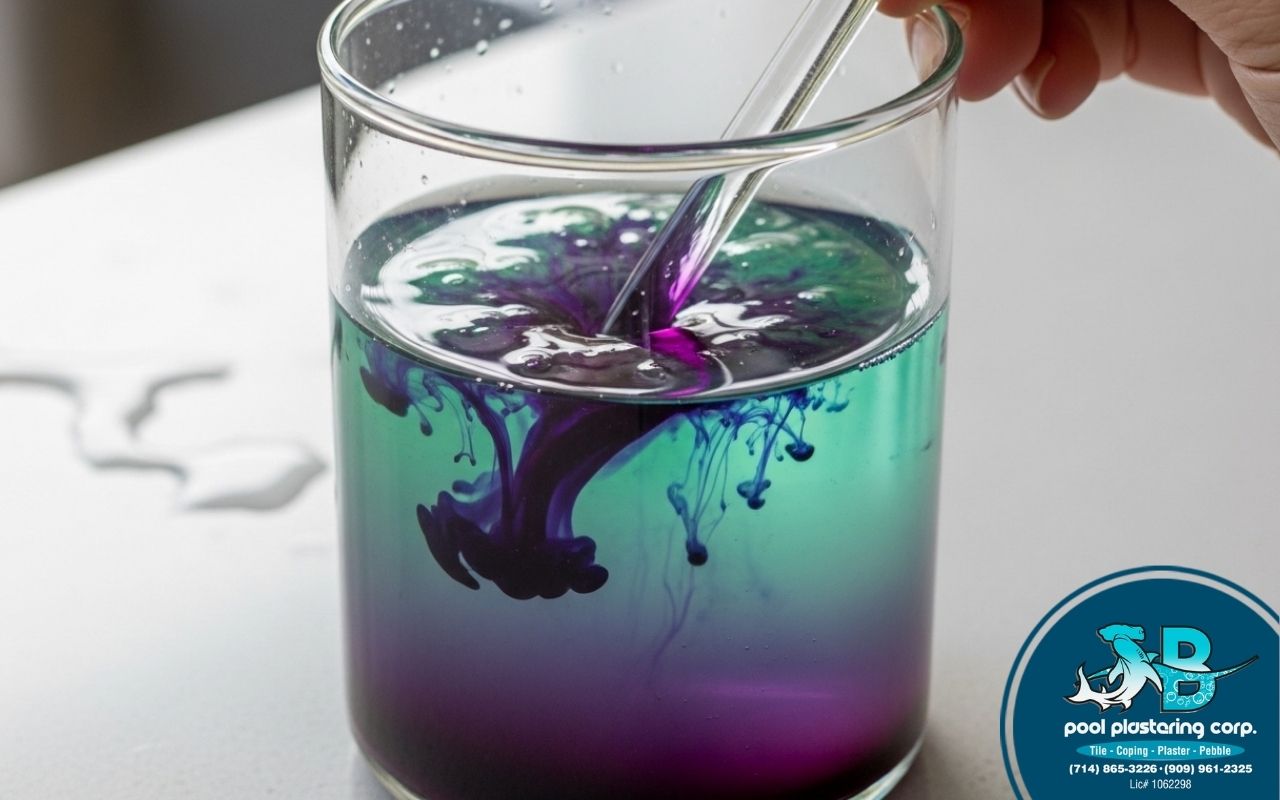
One of the easiest ways to begin How to Test Pool Water Without a Kit is the red cabbage method. First, cut the cabbage into small pieces. Next, pour hot distilled water over it. Then, let it rest for about 30 minutes. After that, strain the liquid into a clear bowl.
Now collect a small pool sample. Add a few drops of the cabbage liquid.
- A pink or red tone suggests the water is more acidic.
- Green or yellow shades usually mean the water is more alkaline.
- Very little color change may indicate a more neutral balance.
This rough method is useful during pre season pool prep because it helps you see whether your water may be outside the comfort zone before swimming starts.

Check Chlorine Presence And General Water Clarity Carefully
Sanitizer matters because dull water often points to poor protection. Although you cannot get an exact reading at home, you can still look for warning signs. For example, cloudy water, a flat look, and quick color changes may suggest low sanitizer.
You can also lower a white plate into the deeper area. If the plate stays easy to see, clarity is usually better. If it fades fast, suspended debris, poor circulation, or early algae may be building up. In the same way, a green or yellow tint can point to bigger chemistry trouble.
If you keep seeing haze, stains, or roughness, Get in Touch | JB Pool Plastering Corp. – Pool Builder so we can help you decide what comes next.
Notice Surface Texture Before Plaster Problems Get Worse
Your pool surface can tell you more than you think. Therefore, run your hand across the walls and steps. Smooth plaster should feel even. Rough spots may point to scale. Slimy areas may suggest algae. Fine dust or flaking can be early plaster damage signs.
At JB Pool Plastering, we take those texture shifts seriously because surface damage often starts with water imbalance. If you want to understand daily care better, read How to Maintain Pool Plaster: Tips for a Longer Lifespan for practical upkeep tips.
Compare Hardness Clues Before Scale Or Etching Appears
Calcium hardness testing is important because low calcium can make water aggressive. On the other hand, high calcium can leave rough scale behind. Without a kit, you can only make rough observations. Still, those clues matter.
- Soap that lathers very easily can point to lower hardness.
- Crusty-feeling surfaces may suggest higher hardness.
- Cloudy water paired with rough walls can mean scale is forming.
- Plaster dust may be a sign that the water is too aggressive.
At JB Pool Plastering, we also tell homeowners to watch water balance csi because balanced water helps protect plaster from both scale and etching over time.

Follow A Safe How To Review Your Pool
If you want a simple routine, this is a smart place to start. Although it is basic, it can help you notice changes fast.
- Collect pool water in a clean, clear cup.
- Look at the color in natural daylight.
- Check clarity with a white plate or tile.
- Test a sample with red cabbage indicator.
- Touch the pool wall for slime, grit, or dust.
- Inspect steps and corners for stains or algae.
- Write down what changed since your last check.
This routine makes How to Test Pool Water Without a Kit easier to repeat. As a result, you can track patterns instead of guessing each time.
Manage Winter And Spring Water Balance More Smoothly
Season changes often create the biggest chemistry swings. During winter pool chemistry, water can look calm while balance slowly shifts. Then, when spring arrives, hidden issues may show up as stains, algae, or rough plaster.
- Check water appearance during colder months.
- Brush walls and steps before buildup hardens.
- Watch for dust, brown marks, or surface roughness.
- Review your pool before the first warm week.
That is why pre season pool prep matters so much. If the surface already looks worn, explore Commercial and Residential Pool Renovation Services to see when a deeper update may be the right move.
Recognize When Expert Support Becomes The Best Option
Home checks are useful, but they have limits. Therefore, if your water stays cloudy, your steps discolor, or your plaster feels rough, it may be time for professional help. In those cases, How to Test Pool Water Without a Kit gives you a starting point, not a final answer.
If you already see aging plaster, visit Pool Re-plaster in Bloomington, CA | Claim Your Free Quote Here!. If stains keep returning on steps, read Pool Steps Turning Brown – Causes, Treatment & Prevention. At JB Pool Plastering, we are here to help you protect your pool surface and plan the right repair path.
Frequently Asked Questions
Can I trust DIY methods for pool water checks?
DIY methods are helpful for quick observations, but they are not exact. However, they can still help you notice rough plaster, cloudy water, or color changes early. For more help with surface care, visit How to Maintain Pool Plaster: Tips for a Longer Lifespan.
What signs show that my pool plaster may be in trouble?
Look for rough walls, plaster dust, flaking, stains, and uneven texture. These are common plaster damage signs that should not be ignored. If the surface already looks worn, review Pool Re-plaster in Bloomington, CA | Claim Your Free Quote Here!.
Why are my pool steps turning brown?
Brown steps can come from metals, stains, algae, or water balance issues. Because the cause can vary, it helps to compare color, texture, and when the stain appears. For a closer look, read Pool Steps Turning Brown – Causes, Treatment & Prevention.
When should I think about renovating instead of patching?
If roughness, staining, or plaster wear keeps returning, a full update may make more sense than repeated small fixes. This is especially true when balance problems have already affected the finish. Learn more at Commercial and Residential Pool Renovation Services.
How can I get help from JB Pool Plastering?
If your pool water keeps looking off or your plaster feels worse each week, contact us for guidance. At JB Pool Plastering, we can help you understand the next step for your surface and overall pool condition. Reach us through Get in Touch | JB Pool Plastering Corp. – Pool Builder.
References:
- How to Close a Pool for the Winter | Instructions and Materials
- How to test pool water: and how often
Subscribe to Download Pool Maintenance 101 Guide
Fill the Form and Start Taking Care of Your Pool




Contact Us Now
Get Your Pool Quote!