How can you remove algae walls fast without wrecking your pool finish?
Algae on pool plaster can spread fast, especially after wind and rain. However, you can fix it with a simple plan. This guide shows how to remove algae walls, balance water, and stop repeat blooms. You will also learn smart brushing, filtration, and cleanup steps that keep water clear.
How can you remove algae walls fast without wrecking your pool finish?
To remove algae walls quickly, brush the surface, correct water balance, raise sanitizer to a shock level, and filter nonstop. Then, vacuum debris out and prevent regrowth with better circulation and routine testing. If the problem keeps returning, JB Pool Plastering Corp can inspect surfaces and equipment for hidden causes.
Algae sticks to pool walls after bad weather
Storm runoff often adds debris and nutrients to pool water. As a result, many owners get a green pool after storms. Moreover, warm water and sunlight help algae grow faster. Low-flow corners, steps, and returns can become problem zones. Therefore, your goal is to remove algae walls and improve circulation at the same time.
If you also see discoloration on steps, check staining causes early. Use Pool Steps Turning Brown – Causes, Treatment & Prevention to compare algae buildup versus metal stains.

What you need before you start
First, gather tools that match your pool surface. Then, you can remove algae walls with less effort. JB Pool Plastering Corp recommends choosing brushes and chemistry tools that fit your finish.
- Pool brush that matches your surface
- Reliable test kit for chlorine, pH, and stabilizer
- Leaf rake or skimmer for storm debris
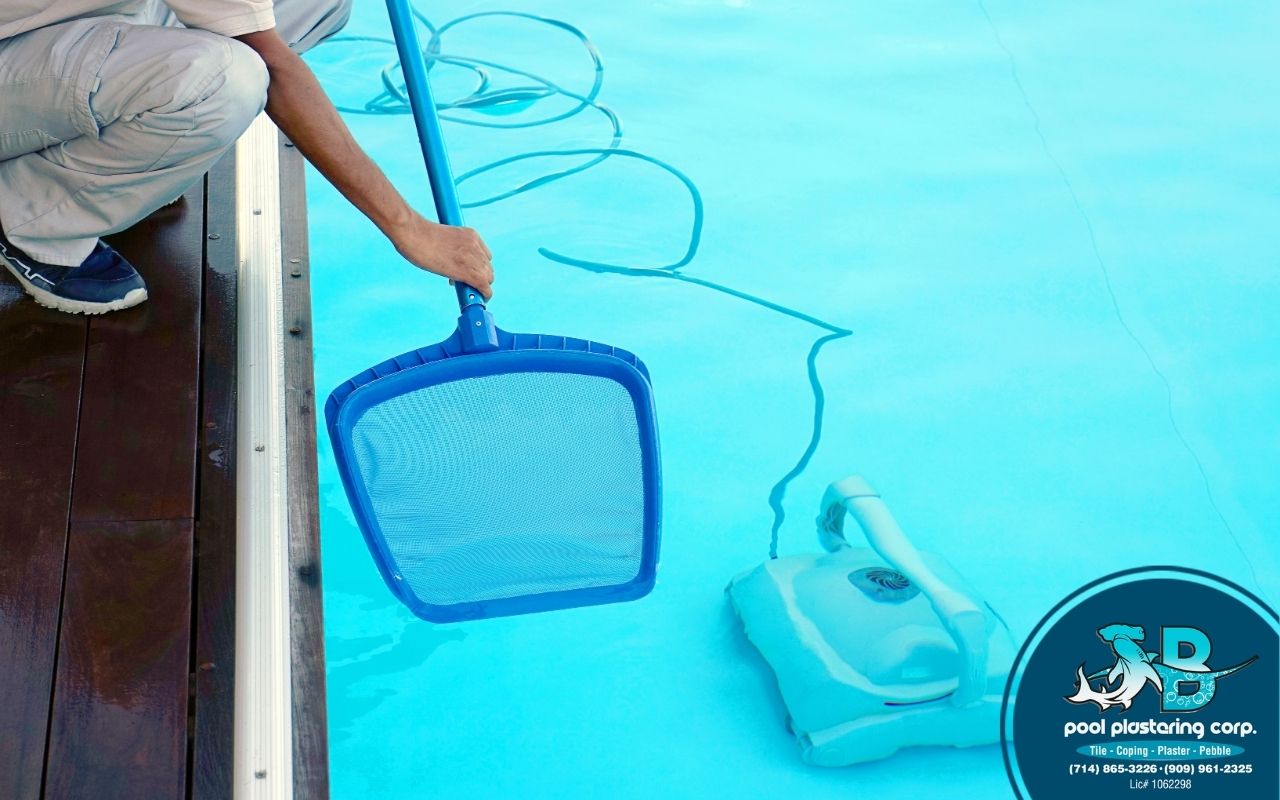
- Vacuum hose and head, or an automatic vacuum
- Filter-cleaning supplies and backwash access
Also, review your system layout if circulation feels weak. Use Parts of Pool: Guide to Key Pool Components to identify skimmers, returns, and filtration parts.

Water chemistry that helps you remove algae walls
Balanced chemistry makes brushing and shock work better. Therefore, test before you add chemicals. Keep pH near 7.2–7.6 so sanitizer stays effective. Next, confirm stabilizer and chlorine levels.
The chlorine CYA ratio matters because stabilizer can weaken active chlorine when it is too high. Consequently, algae survives longer, even when readings look “normal.” If your levels do not respond, partial drain-and-refill may be needed. JB Pool Plastering Corp can help you diagnose whether chemistry or surfaces are driving repeat growth.
Phosphates can also feed algae. A phosphate remover guide can help you dose correctly and filter out what binds. After treatment, run the filter longer and clean it sooner than usual.

How-to: Step-by-step plan to remove algae walls
Follow this order for faster results. Moreover, do not skip steps, because algae regrows from leftovers. If you want a smoother cleanup, plan to remove algae walls over a full day.
- Skim and remove storm debris, then empty baskets.
- Test water, then adjust pH into the ideal range.
- Brush the entire wall surface, including corners and steps.
- Shock the pool according to your test results and product label.
- Run the pump continuously and clean the filter as pressure rises.
- Brush again after several hours to lift stubborn patches.
- Vacuum to waste if the water is cloudy or full of dead algae.
That last step matters because vacuum to waste removes debris instead of recycling it. As a result, you can remove algae walls with fewer repeat cycles.

Brushing and filtration tips that speed cleanup
Brush in slow, overlapping passes from tile line to floor. Then, give extra time to steps and shaded areas. Moreover, keep water moving to stop spores from settling back down.
- Brush twice daily during active growth.
- Point returns to create a circular flow pattern.
- Backwash or clean the filter whenever pressure jumps.
- Run the pump longer until clarity returns.
If you want ideas that also reduce debris entry, improve your pool area setup. Explore What are the best budget friendly ideas to upgrade your home and pool without overspending? for practical upgrades that support cleaner water.
Prevention habits that keep walls clear
Once the water clears, shift from rescue mode to prevention. Therefore, keep a simple weekly routine. Over time, you will remove algae walls less often.
- Test sanitizer and pH at least weekly, and after storms.
- Brush trouble spots weekly, even when water looks clear.
- Keep baskets empty and maintain steady circulation.
- Use phosphate control when levels keep rising.
When you stay consistent, it becomes easier to remove algae walls early, before they spread. JB Pool Plastering Corp often sees faster recovery when owners treat the first signs right away.
FAQs about removing wall algae
How often should I brush if I need to remove algae walls?
Brush daily until the surface feels clean and no new film appears. Then, brush weekly for prevention. Also, review system flow basics in Parts of Pool: Guide to Key Pool Components.
Why do I get a green pool after storms even with chlorine?
Storms add debris and nutrients, while sunlight speeds growth. Moreover, your chlorine may be less effective if the chlorine CYA ratio is off. If stains appear on steps too, compare causes with Pool Steps Turning Brown – Causes, Treatment & Prevention.
When should I use a phosphate remover?
Use it when phosphate tests stay high or blooms repeat. A phosphate remover guide helps with dosing and filter timing. After dosing, clean the filter sooner, because captured waste can clog flow.
Is it better to filter or vacuum to waste during cleanup?
Filter for light haze and small debris. However, vacuum to waste is better when dead algae is heavy and cloudy. It removes material instead of pushing it back through the system.
What if I still can’t remove algae walls after several attempts?
Recurring growth can point to circulation issues, surface wear, or chemistry drift. In that case, JB Pool Plastering Corp can inspect the finish and equipment. To schedule help, use Get in Touch | JB Pool Plastering Corp. – Pool Builder.
When it’s time to call a professional
DIY works for many pools. However, some cases need expert troubleshooting. If you repeatedly remove algae walls and they return within days, the root cause may be hidden. Worn plaster, poor hydraulics, or undersized filtration can keep feeding the problem. For a fast plan, contact JB Pool Plastering Corp through Get in Touch | JB Pool Plastering Corp. – Pool Builder. JB Pool Plastering Corp can help you restore clear water and protect your finish.
Editorial sources
Subscribe to Download Pool Maintenance 101 Guide
Fill the Form and Start Taking Care of Your Pool




Contact Us Now
Get Your Pool Quote!