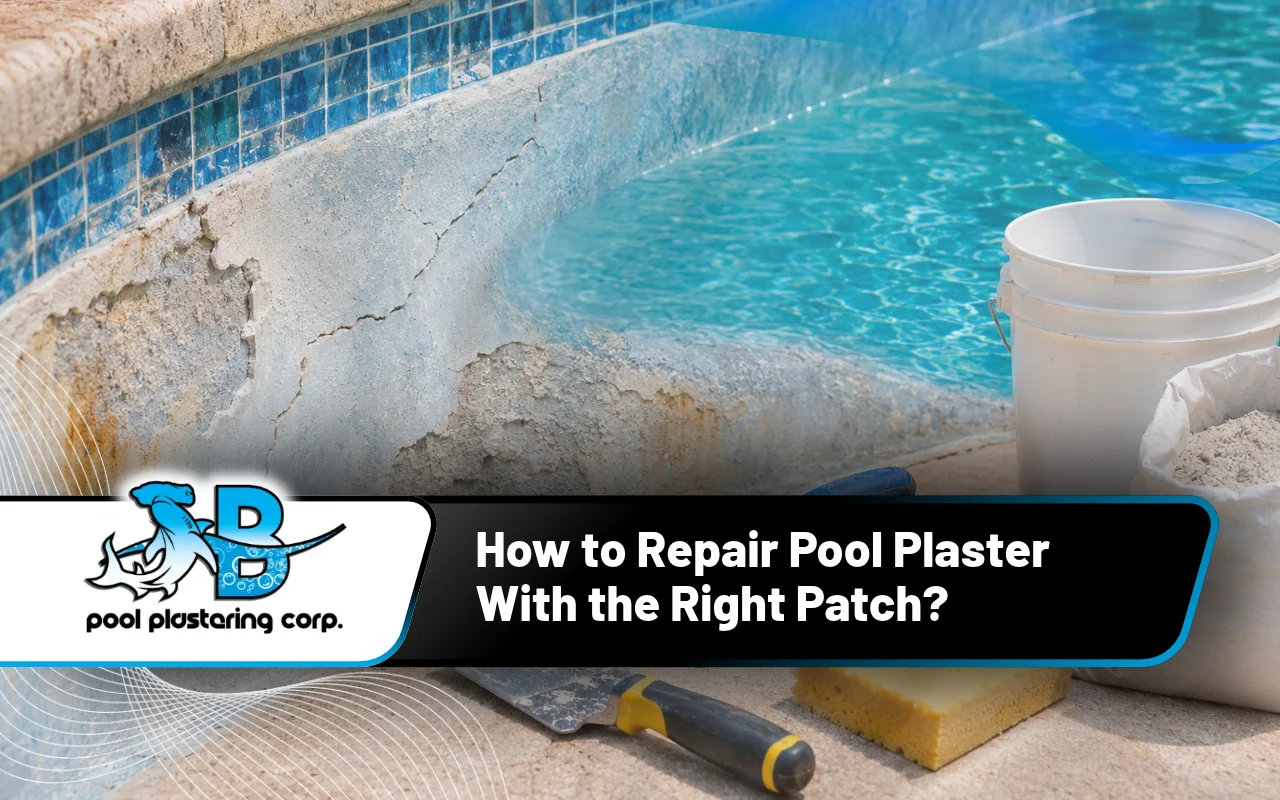
How to Repair Pool Plaster With the Right Patch?
- Assess whether damage is confined to the finish or involves the shell.
- For isolated sound-based damage, choose a repair product suited to the finish and water conditions.
- Prepare, apply, and cure exactly as the repair system requires.
- Knowing how to repair pool plaster also involves recognizing when patching cannot address widespread failure.
A small missing patch and widespread peeling need different decisions. At JB Pool Plastering, we recommend assessing the base before choosing repair material. Our pool resurfacing warning signs helps you separate a localized defect from broader wear without assuming that every mark requires replacement.
Plaster repair restores a limited damaged area of the cement-based interior finish. It can suit a small chip or missing spot when the surrounding finish and base remain sound. Owners need a separate assessment for movement, leakage, or widespread separation, because patching the visible surface cannot correct every underlying defect.
Assessing Damage Distinguishes Local Finish Defects From Shell Concerns
Localized repair may be appropriate when the damaged spot is limited and the surrounding plaster remains firmly attached. The decision changes when cracking moves, the base is unsound, or damage repeats. We recommend checking the pattern and history before selecting material or planning water removal.
The National Plasterers Council’s Pool Interior Finish Disclosure notes that finish variation and fine crazing can occur naturally. A visible line is not proof of a leaking shell. Review our heat and plaster cracking context when the marks appeared during hot weather.
- Small missing spot with a stable base: review a localized repair.
- Widespread loose material: assess the finish beyond the visible patch.
- Changing crack or unusual water loss: investigate the underlying concern.
At JB Pool Plastering, we recommend recording whether the damage is spreading and whether earlier patches failed. Those observations help explain why a repair may be suitable in one location and insufficient in another.
Selecting How to Repair Pool Plaster Materials Protects Compatibility
A suitable patching system must match the base, finish, and application conditions. Underwater products and drained-surface materials are not interchangeable. Follow the specific instructions for preparation, thickness, working time, and cure instead of combining generic cement, bonding additives, and guessed water ratios.
If you ask can pool plaster be repaired, many isolated finish defects can be reviewed for patching. However, the answer does not promise an invisible color match or a permanent solution to movement. Expect possible color and texture differences. Existing plaster changes with age and water conditions, so fresh material can remain noticeable.
We recommend preserving the finish name or installer records when available. Before buying a product, confirm whether the damaged area has sound material around it. Our plaster care and condition guide provides maintenance context. A repair needs an appropriate base, while ongoing water care helps prevent new damage after the patch.
Preparing and Applying a Patch Requires Product-Specific Work Steps
A patch succeeds only when preparation and application match the repair system. The damaged area needs a suitable sound base, and the product must receive the required curing conditions. Do not copy a universal drying period, filler consistency, or feathered-edge detail from an unrelated material.
- Identify the finish and establish whether the defect is localized.
- Select a repair system approved for the intended conditions.
- Prepare the sound base and edges as the system directs.
- Mix and apply within the listed working time and thickness limits.
- Follow its cure and return-to-service instructions.
- Check the finished area and address contributing water conditions.
Grinding or cutting can create hazardous dust, and removing fittings can introduce separate safety problems. Leave invasive preparation to qualified personnel. Do not remove suction outlet covers. In a discussion with JB Pool Plastering, explain whether access is underwater or above the waterline before deciding how the repair will proceed.
Considering Underwater Patching Can Avoid Unnecessary Full Pool Draining
Some repair materials are formulated for underwater use, allowing certain small defects to be addressed without emptying the pool. Suitability depends on the product, access, and damage. An underwater patch cannot be assumed to repair a moving crack or replace loose plaster across a large area.
For how to patch pool plaster underwater, begin with the product’s rated use rather than a general cement recipe. Follow its preparation and application requirements, and arrange safe access to the work. Do not drain merely to inspect a small spot. Water removal has separate groundwater and discharge considerations.
For small damaged spots, we recommend distinguishing a surface patch from leak sealing. If water loss is suspected, locating the source is a separate task. PoolPro’s NPC startup guidance also shows that full plaster renewal requires coordinated filling and water care. Patch instructions and full-replaster startup are different procedures. Never delay filling new plaster based on an unrelated patch cure time.
Reviewing Widespread Failure Clarifies When Full Finish Renewal Fits
Full replastering becomes a stronger consideration when deterioration extends beyond a few stable spots or the finish has lost broad areas of attachment. Repeated patches can leave an uneven surface without correcting wider failure. The decision should compare the overall finish condition with the proposed repair scope.
To assess when plaster damage means a full replaster, consider loose material, widespread loss, recurring defects, and the supporting base. For pool plaster repair in Bloomington CA, gather photos from several areas rather than only the worst spot. Review our Bloomington pool replastering options if renewal is under consideration.
During planning with JB Pool Plastering, ask which parts can be repaired locally and which need broader preparation. Separate shell repair from finish replacement. Discuss the refill and startup responsibilities before approving renewal. A clear scope should explain the actual condition without automatically turning a small chip into a whole-pool project.
Frequently Asked Questions
Can every small plaster crack be fixed with a patch?
No. Size alone does not determine whether a crack is confined to the finish or involves movement beneath it. Review our plaster crack cause guide and document changes. A narrow line that moves or coincides with water loss may need investigation before any surface patch.
Will a new patch exactly match my existing finish?
An exact match cannot be assumed. Older plaster can change shade and texture, while new repair material may cure differently. Ask about expected appearance before work begins. A sound localized repair can still remain visible, especially in a colored or aggregate interior finish.
Which water care habits help protect a repaired area?
Follow the repair product’s instructions and maintain suitable water balance after the allowed return to service. Our plaster maintenance and water care provides general context. Keep test records and avoid aggressive cleaning that may damage the patch or surrounding older finish.
Does a patch repair damaged tile or loose coping?
No. A plaster patch addresses the interior finish at the repaired location. Tile, grout, coping, and plumbing involve different materials and defects. Document each concern separately so the scope identifies the appropriate work instead of treating every damaged part as one plaster problem.
Where can I compare patching with a broader interior renewal?
Start with our finish replacement warning signs and collect photos of several areas. Repeated localized failure or widespread loose material may justify renewal. The choice should depend on the whole finish assessment, rather than a single visible defect or a universal age threshold.
Matching Repair Scope to Damage Supports a Sounder Interior
Before choosing how to repair pool plaster, confirm whether the problem is local, widespread, or linked to the shell. With JB Pool Plastering, you can discuss the damage history and compare localized repair with finish renewal. Bring photos and past repair details. Review your repair options so material choice and preparation follow the actual condition of the pool.
References
- Pool Interior Finish Disclosure — National Plasterers Council
- NPC Start-up Procedure for Standard Pool Plaster — PoolPro
Subscribe to Download Pool Maintenance 101 Guide
Fill the Form and Start Taking Care of Your Pool




Contact Us Now
Get Your Pool Quote!