
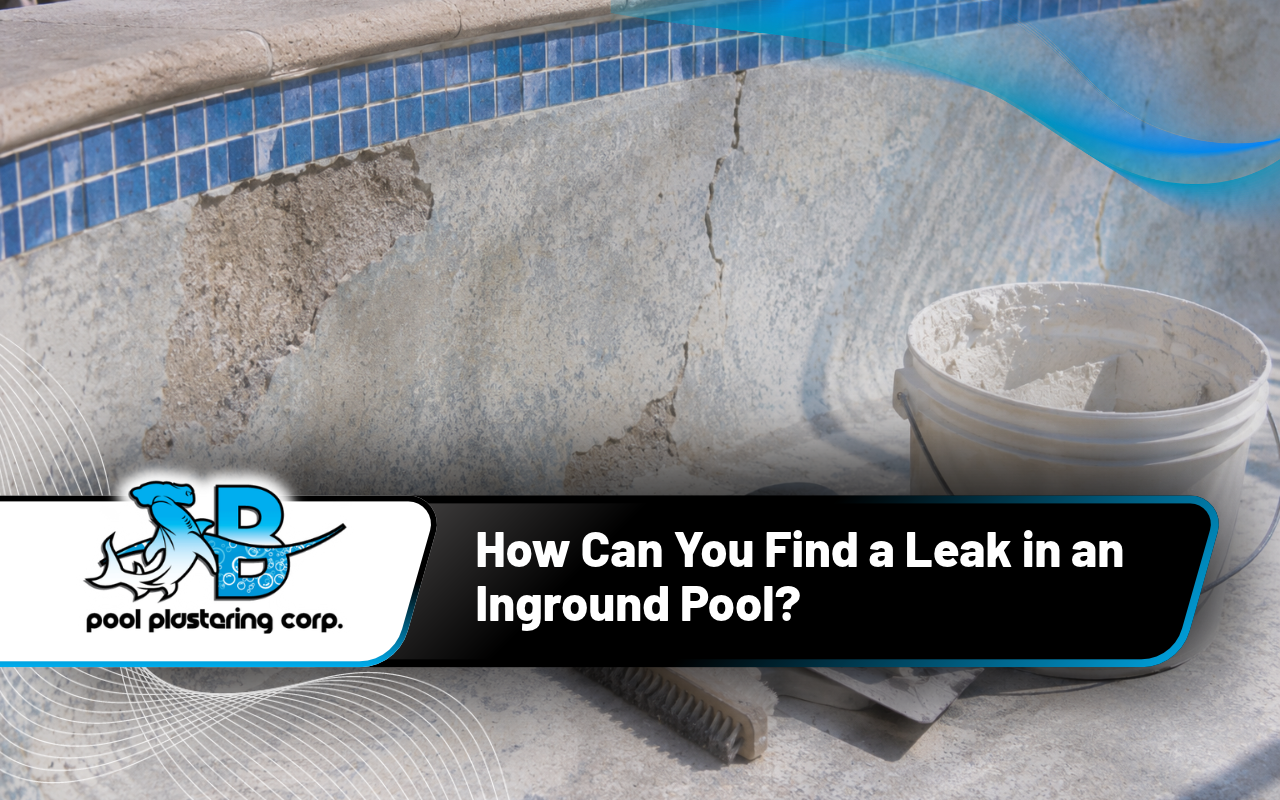
How Can You Find a Leak in an Inground Pool?
- Compare pool and bucket water loss over a controlled 24-hour period.
- Exclude rainfall, refilling, swimmers, and other changes that distort the test.
- Inspect visible equipment and record suspected areas without opening fittings.
- To find a leak in an inground pool, use follow-up testing to locate the source; a bucket test cannot locate it.
A falling waterline can reflect evaporation, a leak, or water lost during maintenance. At JB Pool Plastering, we recommend collecting measurements before choosing repairs. Our pool inspection observation guide helps you record useful details without assuming that the first visible crack is the source.
Leak investigation separates ordinary water loss from escape through equipment, fittings, plumbing, or the pool structure. Owners needing repeated refills can begin with a controlled comparison test. The aim is to confirm abnormal loss and narrow the next investigation, rather than sealing random marks or draining the pool immediately.
Measuring Water Loss Establishes Evidence Before Choosing a Repair
A controlled measurement is more useful than a universal daily water-loss limit. Evaporation changes with weather, water temperature, and exposure. Splashing, backwashing, and automatic refilling can also alter the waterline, so record those events before interpreting a drop as evidence of a leak.
If you ask how much water loss is normal for a pool, compare against local conditions and your own test. A fixed quarter-inch or half-inch rule cannot diagnose every pool. Measure from the same fixed point. Keep a dated log of levels, weather, and equipment operation.
The EPA’s Jump Into Pool Water Efficiency guide identifies evaporation and leakage as separate water-loss causes. To review the surface alongside the measurements, see our heat-related plaster cracking guide. A visible hairline mark does not by itself prove a shell leak. We recommend gathering evidence before treating appearance as a diagnosis.
Using a Bucket Test Separates Evaporation From Excess Loss
A bucket test compares the pool’s water-level drop with a small control container under similar conditions. Greater pool loss suggests water is leaving by another route. The test is useful for screening, but it cannot identify which fitting, pipe, or surface is leaking.
- Choose a day without rain or heavy wind and keep swimmers out.
- Stop automatic refilling, fountains, and other activities that change the water level.
- Follow a consistent protocol, such as the EPA’s equipment-off comparison.
- Secure a watertight bucket on a pool step with most of it submerged.
- Fill it near the top and mark both starting water levels independently.
- After 24 hours, compare each measured drop rather than final heights.
For a bucket test for pool leak screening, avoid a floating container or one that leaks. Do not compare different test conditions. Refill, rainfall, and backwashing can invalidate the result. With JB Pool Plastering, share your measurements and test setup when discussing the next repair decision.
Observations Help Find a Leak in an Inground Pool
Accessible equipment can reveal water loss through drips, damp fittings, or an unintended waste-line discharge. Observe without opening pressurized parts or reaching into electrical equipment. The inspection helps narrow the next test, but a dry equipment pad cannot rule out underground or shell-related leakage.
- Look for drips at accessible pump unions and filter connections.
- Check whether water appears at a waste or backwash outlet.
- Record damp ground that appears repeatedly near the same area.
- Photograph changes around the skimmer, tile line, or return fittings.
Signs of a crack in pool plaster include visible lines, gaps, or missing finish, but those signs are not a leak confirmation. At JB Pool Plastering, we recommend separating surface wear from a suspected water-loss source. Our pool repair assessment options offers context for discussing the required scope. Leave lights and drain covers untouched.
Interpreting Pump Comparisons Narrows Questions Without Proving the Source
Different water loss with the pump operating and stopped can guide further investigation, but neither result identifies the source alone. Plumbing, fittings, and the shell can all remain relevant. Controlled comparisons need similar conditions and sufficient water to keep the equipment operating safely.
The supplied assumption that pump-off loss means underground piping is incorrect. Water can escape through shell defects, fittings, or other paths with circulation stopped. Likewise, greater pump-on loss can suggest a pressure-side concern without proving exactly which pipe is involved. Use patterns as clues, not final diagnoses.
Specialty leak dye may help a qualified person observe flow near a suspected opening in calm water. Avoid adding random household dye or dismantling fittings. The National Plasterers Council notes that fine finish crazing can occur without being a defect. A plaster line is not automatically a structural crack. Combine observations with appropriate confirmation before deciding on repairs.
Discussing Test Results Connects Leak Investigation With Appropriate Repairs
A repair discussion should begin with the evidence: measured loss, test conditions, visible drips, and when the problem started. If the source remains unclear, targeted leak testing may be necessary. Repairing the finish before locating a plumbing problem can leave the water loss unchanged.
For pool leak repair in Bloomington CA, tell us whether refills are frequent and whether the waterline appears to stabilize. In a discussion with JB Pool Plastering, bring the bucket measurements and photographs. Ask what confirms the suspected leak and whether specialist detection is needed before repair work.
Use our pool review preparation checklist to organize the pool history. Do not let the level fall below the equipment’s safe operating requirements while waiting for an assessment. Avoid unnecessary draining. The goal is a repair directed at a confirmed source, with surface renewal considered only when its condition separately justifies it.
Frequently Asked Questions
Can a negative bucket test rule out every intermittent leak?
No. Some water loss may occur only under specific operating conditions or at a different water level. A single comparison is a snapshot, not proof that every component is sound. Repeat under controlled conditions when appropriate and document when the suspected loss actually occurs.
Do all visible plaster cracks need the same repair?
No. Fine surface crazing, damaged finish, and a moving shell crack are different concerns. Our summer cracking causes overview helps distinguish the context. If a crack changes or appears with unusual water loss, ask for assessment rather than choosing a patch from appearance alone.
What should I record before arranging a pool inspection?
Keep water-level measurements, equipment schedules, weather notes, and details of automatic refilling or backwashing. Our inspection preparation for pool owners adds useful observation points. Include clear photographs and the date the problem began so the investigation starts with comparable evidence rather than rough impressions.
Will resurfacing automatically solve water loss from buried plumbing?
No. New interior finish does not repair a leaking buried pipe. Review our pool repair scope guidance and discuss how the source will be confirmed. Plumbing repairs and finish work may both be needed, but one should not be assumed to replace the other.
Should swimmers keep using a pool during leak testing?
Keep swimmers out during the controlled test, because splashing and drag-out change the measurements. Continued use afterward depends on the actual condition, equipment operation, and water quality. If the water is dropping rapidly or the area appears unstable, pause use and seek qualified assessment.
Locating the Source Supports Repairs That Address Actual Water Loss
If you need to find a leak in an inground pool, begin with controlled measurements and safe observations. With JB Pool Plastering, you can discuss the evidence and the repair concerns it raises. Bring dated results rather than relying on a guessed evaporation allowance. Discuss your water loss before authorizing work that may miss the actual source.
References
Subscribe to Download Pool Maintenance 101 Guide
Fill the Form and Start Taking Care of Your Pool




Contact Us Now
Get Your Pool Quote!