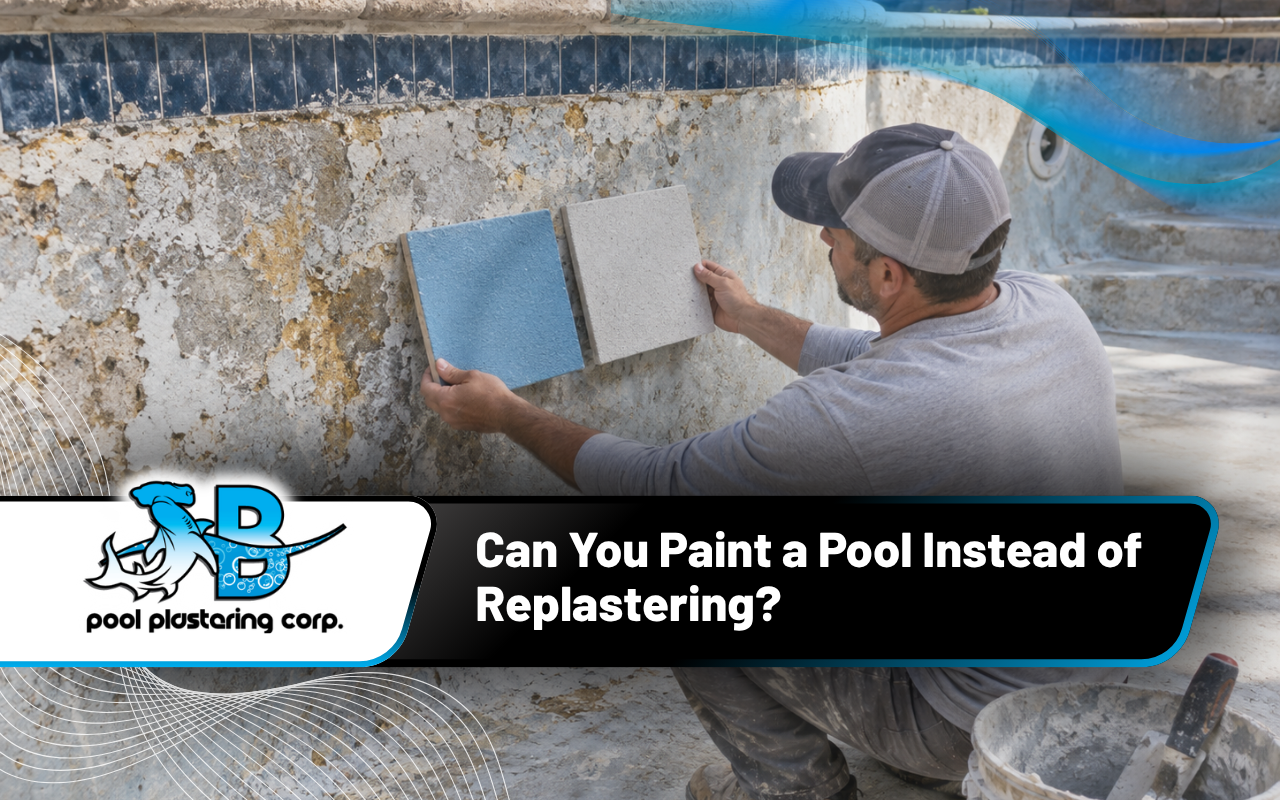
Can You Paint a Pool Instead of Replastering?
| Pool condition | Painting decision |
|---|---|
| Sound compatible surface | Yes, with a coating rated for pool immersion and correct preparation |
| Unknown or peeling coating | Identify and prepare the existing finish before choosing paint |
| Loose plaster or moving cracks | Resolve the defect first; paint cannot repair structural damage |
Color can change a pool’s appearance, but a coating cannot rebuild a failing surface. If you ask can you paint a pool, the answer depends on what lies underneath. At JB Pool Plastering, we recommend comparing paint with resurfacing and replastering methods before deciding which work your pool actually needs.
Pool painting applies an immersion-rated coating over a compatible, prepared surface. Owners considering a color refresh may compare it with replacing the plaster finish. Painting can change appearance and protect suitable surfaces, but it does not replace missing plaster, stabilize loose material, or fix movement in the concrete shell.
Evaluating Can You Paint a Pool Starts With Compatibility
Painting is possible when the substrate, existing coating, and chosen pool paint are compatible. The surface must also meet preparation requirements. Ordinary exterior or house paint is unsuitable for continuous pool immersion, and choosing a color does not establish whether a coating will bond.
Determine whether the pool is bare concrete, plastered, fiberglass, or already painted. Unknown coatings may need identification before you choose a new system. Compatibility comes before color selection. Our pool surface material comparison gives context for different interiors without suggesting that every surface accepts the same product.
We recommend keeping paint labels, invoices, and previous maintenance records. If you cannot identify an existing coating, seek manufacturer guidance or qualified assessment. With JB Pool Plastering, you can discuss whether the pool’s condition favors finish renewal instead of adding another coating over an uncertain base.
Weighing Pool Paint vs Plaster Reveals Different Repair Outcomes
Paint creates a coating, while plaster creates a cement-based interior finish applied over the pool shell. Neither is the pool’s structural shell. The right choice depends on the condition beneath the surface, the desired finish, preparation needs, and expected future maintenance.
| Decision factor | Pool paint | Plaster renewal |
|---|---|---|
| Soundness required | Stable compatible base | Prepared sound base after necessary repair |
| Existing failing material | Remove or treat according to coating requirements | Address loose finish during preparation |
| Future renewal | Allow for recoating and preparation | Allow for finish maintenance and eventual renewal |
| Major structural cracking | Not repaired by painting | Requires separate assessment before finishing |
When comparing pool paint vs plaster, count preparation, downtime, and later work rather than only the coating price. Review plaster finish selection guide if a new interior is under consideration. A lower initial price may not mean lower lifetime cost. Ask for separate scopes so your comparison covers equivalent work.
Preparing the Surface Determines Whether a New Coating Bonds
A painting workflow starts with identifying the surface, resolving defects, and following the coating manufacturer’s preparation method. Cleaning, moisture conditions, and existing paint removal can determine success. Skipping preparation can lead to peeling even when the new product is suitable for pools.
- Identify the existing finish and select a compatible coating.
- Arrange safe draining only after groundwater and discharge review.
- Remove unsound material and resolve defects before coating.
- Follow the specified cleaning, surface preparation, and moisture checks.
- Apply the required coats and allow the full cure before refilling.
Anyone researching how to paint a pool should use the actual product instructions, not a universal acid-etch recipe. Some systems require different preparation or moisture conditions. More paint is not automatically better. Pool & Spa News notes that coat thickness and specified drying time affect results. Keep the work area secured throughout preparation and curing.
Maintaining Coatings Helps Manage Wear Without Promising Fixed Lifespans
Paint lifespan varies with the coating, application, underlying material, exposure, and water care. No single number applies to every painted pool. Manufacturer guidance can help set expectations, but it should not become a guaranteed renewal interval for a surface that has not been assessed.
To answer how long does pool paint last, identify the product first and examine its application history. A recently painted pool with bubbles may have a preparation problem rather than normal age-related wear. Document peeling and blistering before covering them with another coat.
The CDC recommends routine testing and adjustment of chlorine and pH for home pools. Surface care also follows the coating manufacturer’s instructions. Avoid unsuitable abrasive tools and inspect for new damage. At JB Pool Plastering, we recommend comparing the cost of repeated preparation with the scope of replacing a failing interior, rather than relying on broad lifespan claims.
Discussing Existing Damage Clarifies the Right Interior Renewal Scope
A project review should establish whether the pool needs a color change, isolated repair, or wider finish replacement. Peeling paint, loose plaster, and cracks require different decisions. Asking for an assessment before choosing the material can prevent money spent on a coating that cannot solve the problem.
For pool replastering in Fontana CA, bring photos of the worn areas and any paint records. Our Fontana pool interior renewal page gives a relevant next step. During a discussion with JB Pool Plastering, explain whether the concern involves roughness, discoloration, missing material, or water loss.
- Clarify which defects require repair before finish work.
- Ask whether old paint must be removed for replastering.
- Compare the preparation and refill responsibilities in each scope.
Separate structural concerns from finish choices. Request written preparation details before comparing proposals. That makes the decision practical without assuming every painted pool needs replacement or every plastered pool is ready to paint.
Frequently Asked Questions
Can ordinary outdoor paint work inside a swimming pool?
No. Continuous immersion and pool chemistry require a coating specifically rated for that environment. A product designed for a fence or house wall is not an equivalent substitute. Confirm the paint’s listed substrates, preparation method, application conditions, and cure requirements before buying materials.
Will fresh paint hide plaster that is already separating?
Paint may cover the color temporarily, but it cannot make loose plaster bond securely to the shell. Review our finish renewal method guide and have the damaged material assessed. Covering a failing base can leave the same defect beneath the new coating.
Which finish choices deserve comparison when replacing old plaster?
Traditional plaster, quartz, and pebble finishes have different appearances and care considerations. Our interior plaster finish options can help with that comparison. Choose the finish after assessing the base and scope, rather than using paint as a direct equivalent to every interior material.
Does a saltwater pool automatically rule out pool painting?
Not automatically. Suitability depends on the coating’s stated compatibility and the pool’s operating conditions. Ask the manufacturer about saltwater use and follow its water-care guidance. A salt system does not remove the need for sound preparation, correct application, and suitable curing before refilling.
What information should I bring to a Fontana project review?
Bring photos, approximate dimensions, known finish age, and records for any previous paint. For Fontana replastering project guidance, describe areas that peel or feel rough. Those details help distinguish a coating discussion from the repairs and preparation required for interior finish replacement.
Matching the Finish to Existing Damage Supports Better Planning
Before deciding can you paint a pool, compare the surface condition with the result you want. With JB Pool Plastering, you can discuss whether existing damage points toward localized repair or interior renewal. Keep coating records and photos ready. Compare your finish options so preparation, future maintenance, and refilling form part of the same decision.
References
- Follow These Basics When Applying That Fresh Coat of Paint to a Swimming Pool
- Home Pool and Hot Tub Water Treatment and Testing — CDC
Subscribe to Download Pool Maintenance 101 Guide
Fill the Form and Start Taking Care of Your Pool




Contact Us Now
Get Your Pool Quote!