How Do Types of Pool Plaster Shape Your Swim?
Pool surfaces change how water looks, how feet feel, and how much care the finish needs. Choosing the right finish early can help your pool stay safer, cleaner, and easier to enjoy through many swim seasons.
How Do Types of Pool Plaster Shape Your Swim?
Types of pool plaster shape your swim by changing the pool’s texture, color, comfort, durability, and care needs. The right finish should match how often you swim, your design goals, your water conditions, and the level of maintenance you want.
Pool plaster is the interior finish applied over a pool shell to create a smooth, watertight, and finished swimming surface. Homeowners need it when building, replastering, or renewing an aging pool. The right surface helps solve rough texture, staining, dull color, and worn plaster problems.
Compare types of pool plaster for lasting backyard comfort
Different plaster finishes serve different pool goals, so the best choice depends on comfort, appearance, upkeep, and surface life. A bright finish can make water look clear, while textured finishes can add grip and depth for a more custom pool feel.
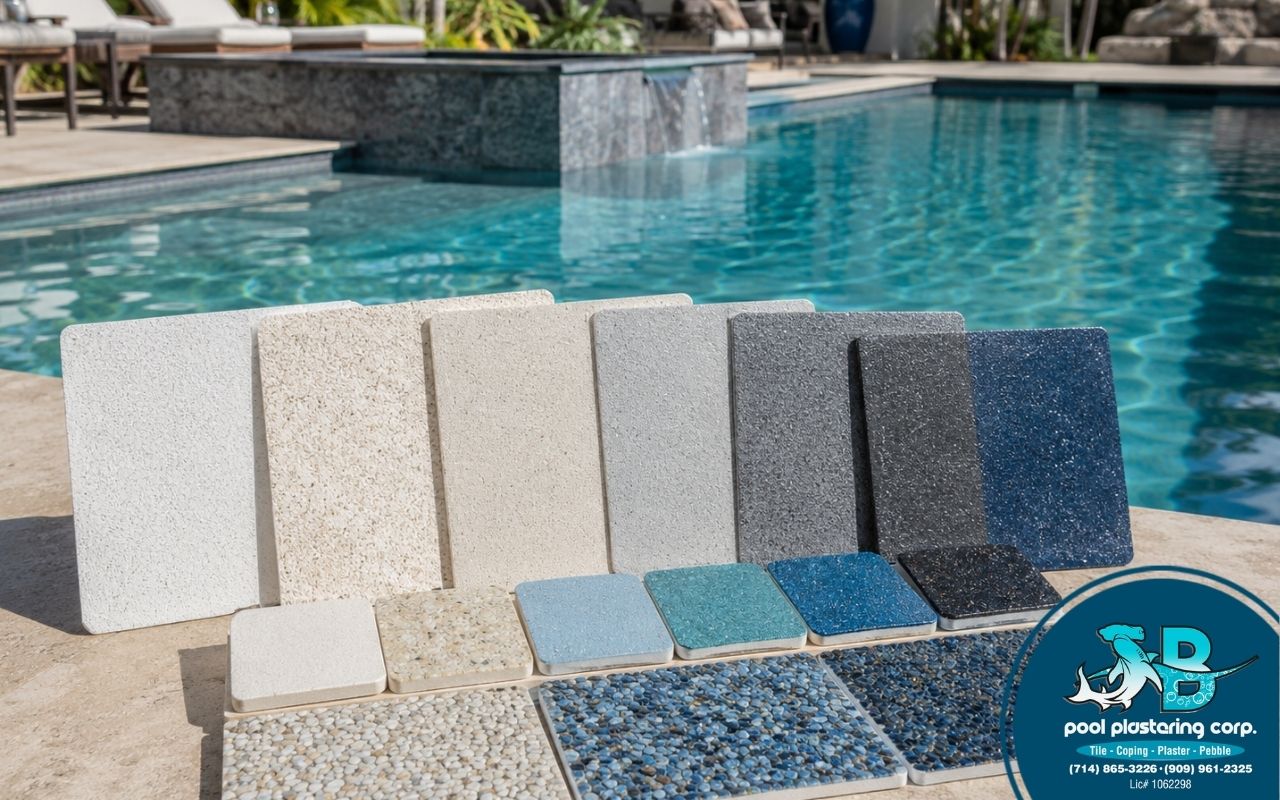
At JB Pool Plastering, we help homeowners compare surface options before choosing a finish. The main types of pool plaster include classic white plaster, quartz, exposed aggregate, pebble, and glass bead blends.
- White plaster finish: clean, bright, classic, and budget-conscious.
- Quartz plaster: stronger than basic plaster and more stain resistant.
- Exposed aggregate: textured, natural-looking, and slip-conscious.
- Pebble plaster: earthy, durable, and rich in color depth.
- Glass bead plaster: smooth, reflective, and made for a luxury look.
Surface texture matters because swimmers feel the plaster every time they stand, walk, or sit in the pool. A finish should feel comfortable underfoot while still supporting safe movement around wet surfaces.
Preserve white plaster finish beauty with steady maintenance
A white plaster finish gives a pool a bright and timeless look, but it needs steady care to stay clean. Light surfaces can show stains, mineral scale, and algae faster, so brushing and balanced water are important from the start.
Many homeowners choose white plaster because it keeps the water looking clear and blue. It also works with many tile colors, coping styles, and backyard designs.
However, white plaster can reveal small changes quickly. Leaves, metals, hard water, and poor balance may leave marks. According to the CDC, pool operators should keep disinfectant and pH levels properly maintained to help protect swimmers and water quality.
- Brush the plaster often to reduce surface buildup.
- Test pool water on a regular schedule.
- Remove leaves before stains form.
- Ask for help when rough spots or discoloration spread.
For more care guidance, visit How to Maintain Pool Plaster.
Upgrade quartz plaster benefits for stronger surface value
Quartz plaster benefits include better durability, richer color choices, and improved resistance to staining compared with basic white plaster. This finish blends quartz aggregate with plaster, creating a surface that handles daily use well in busy residential pools.
With JB Pool Plastering, you get clear guidance before choosing quartz or another surface. Quartz can be a smart choice when the pool gets frequent use or when hard water is a concern.
The quartz particles add strength and sparkle. They can also help the finish hold color longer. As a result, quartz often offers a practical balance of beauty and durability.
- Choose quartz when you want more color depth.
- Consider quartz for family pools with regular traffic.
- Review texture samples before making a final decision.
- Ask how each finish should be brushed after installation.
Quartz plaster is often chosen by homeowners who want a smoother look than pebble but more strength than standard plaster. That makes it useful for pool re-plaster projects where both comfort and lifespan matter.
Add textured finishes for grip, color, and character
Textured plaster finishes can improve grip, change water color, and create a more natural pool style. Exposed aggregate and pebble finishes are popular when homeowners want added surface character without losing the function of a durable pool interior.
Exposed aggregate includes small stones or crushed material in the surface. This finish creates a rugged look and can support better footing. Pebble plaster uses rounded stones for a softer natural feel.
These finishes work well for homeowners who want a resort-style pool. They also hide minor visual changes better than plain white surfaces. Still, textured finishes need regular brushing because debris can settle between small surface points.
Glass bead plaster creates a brighter, more reflective look. The beads catch light and can make the water appear more vivid. This option may suit homeowners who want a polished and custom finish.
Our team at JB Pool Plastering can review surface feel, color samples, and maintenance needs before work begins.
Match smooth plaster care with daily pool habits
Smooth plaster care works best when brushing, water testing, and surface checks become simple habits. A smooth pool finish can feel pleasant underfoot, but it still needs proper chemical balance to reduce etching, scale, stains, and algae growth.
The Pool & Hot Tub Alliance explains that balanced pool chemistry helps keep water clean and supports pool equipment. For plaster pools, balanced water also helps protect the interior finish from avoidable surface wear.
After you reach JB Pool Plastering, we explain the maintenance steps that fit your selected finish. We may also recommend reviewing Pool Resurfacing vs Replastering when the existing surface needs more than basic care.
- Brush smooth areas gently to avoid surface buildup.
- Keep pH, alkalinity, and calcium hardness in proper balance.
- Watch for rough patches, stains, or cloudy water.
- Schedule service before small plaster issues spread.
Calcium balance is important because aggressive water can etch plaster, while scale-forming water can leave rough deposits. Smooth plaster care should protect both the surface and the swimmer experience.
Guide your replaster process with clear service steps
A clear replaster process helps homeowners know what to expect before the pool surface is changed. When you contact us, we review your pool condition, surface goals, finish options, and next steps so the project feels easier to understand.
When customers contact JB Pool Plastering, we ask about the pool size, current finish, visible damage, and preferred look. Photos can help, but an in-person review may be needed for better surface guidance.
- First, we review the current plaster condition and look for stains, cracks, rough areas, or hollow spots.
- Next, we talk through finish options, including white plaster, quartz, pebble, aggregate, or glass bead.
- Then, we explain preparation needs before the new surface is applied.
- During the visit, we help you understand what happens before, during, and after replastering.
- Once the work is complete, we explain care steps for the new finish.
Homeowners who want to understand the bigger project can read Understanding the Pool Resurfacing Process.
Protect pool comfort by choosing the right finish
The right pool finish should support safe footing, easy care, visual appeal, and long-term value. Homeowners should compare texture, color, maintenance, and surface strength before choosing among the main types of pool plaster.
Families with children may prefer finishes with more grip. Homeowners who want bright, classic water may prefer white plaster. Those looking for color depth and durability may prefer quartz or pebble.
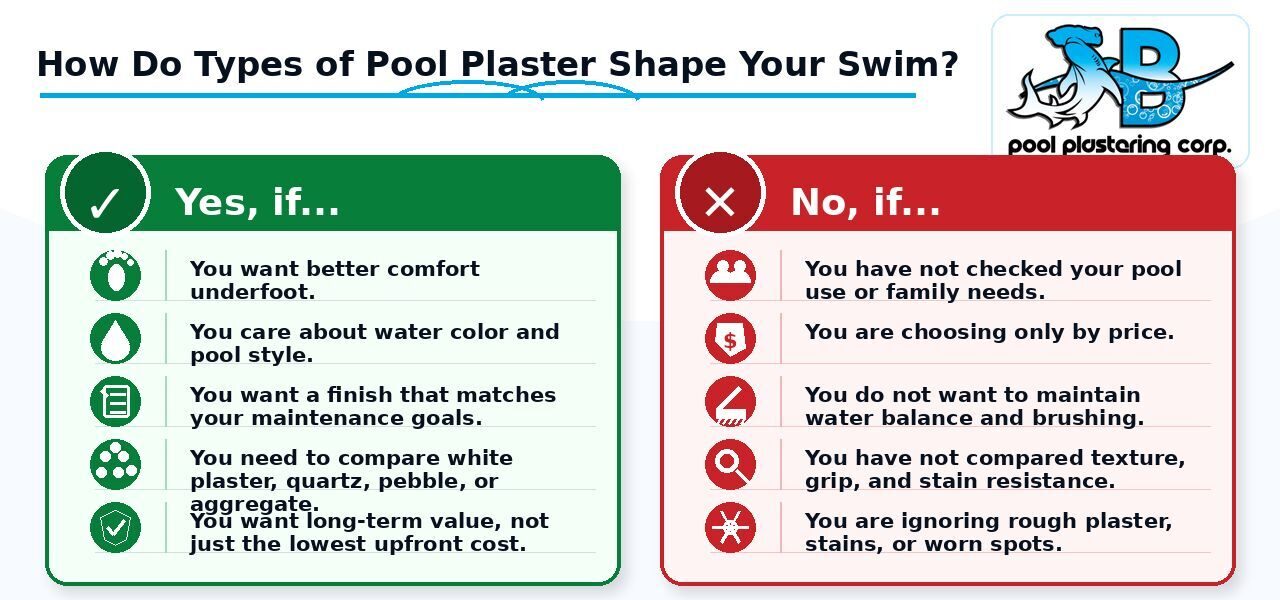
Use these decision points before making a final choice:
- Foot comfort: decide whether smooth or textured feels better.
- Water appearance: compare how each finish changes water color.
- Maintenance level: choose a finish you can care for consistently.
- Pool use: match the surface to kids, guests, pets, or quiet use.
- Long-term plans: think about durability before choosing only by price.
If your current surface feels rough, looks stained, or has worn patches, review Pool Re-plaster in San Bernardino CA to learn when replastering may be the next step.
Frequently Asked Questions
How do I know which pool plaster finish is best?
The best finish depends on texture preference, water color, maintenance needs, pool use, and budget goals. Compare smooth and textured samples before choosing. You can also review Pool Resurfacing vs Replastering if your current finish is worn.
When should I choose a white plaster finish?
Choose a white plaster finish when you want a bright, classic pool interior that makes the water look clean and blue. It is a timeless option, but it needs regular brushing and balanced water to reduce stains.
Why is quartz plaster popular for residential pools?
Quartz plaster is popular because it adds strength, color depth, and better stain resistance compared with basic plaster. Many homeowners choose it when they want a durable finish that still feels smooth and attractive.
What happens if I ignore rough pool plaster?
Rough plaster can become uncomfortable for swimmers and may signal surface wear, scale, or etching. It can also make cleaning harder. Learn care basics in How to Maintain Pool Plaster.
How do I start a pool replaster project?
Start by checking your pool surface for stains, rough spots, cracks, or fading. Then contact a pool plaster team to review finish options and service steps. You can use the Contact JB Pool Plastering Corp page to request guidance.
Start your pool finish choice with expert guidance
Choosing among the types of pool plaster is easier when you compare comfort, care, and design before work begins. Contact us through Contact JB Pool Plastering Corp to discuss your pool surface and plan the next step.
References
Operating and Managing Public Pools, Hot Tubs and Splash Pads
Pool Chemicals: Keeping Your Water Safe & Balanced
Subscribe to Download Pool Maintenance 101 Guide
Fill the Form and Start Taking Care of Your Pool




Contact Us Now
Get Your Pool Quote!