
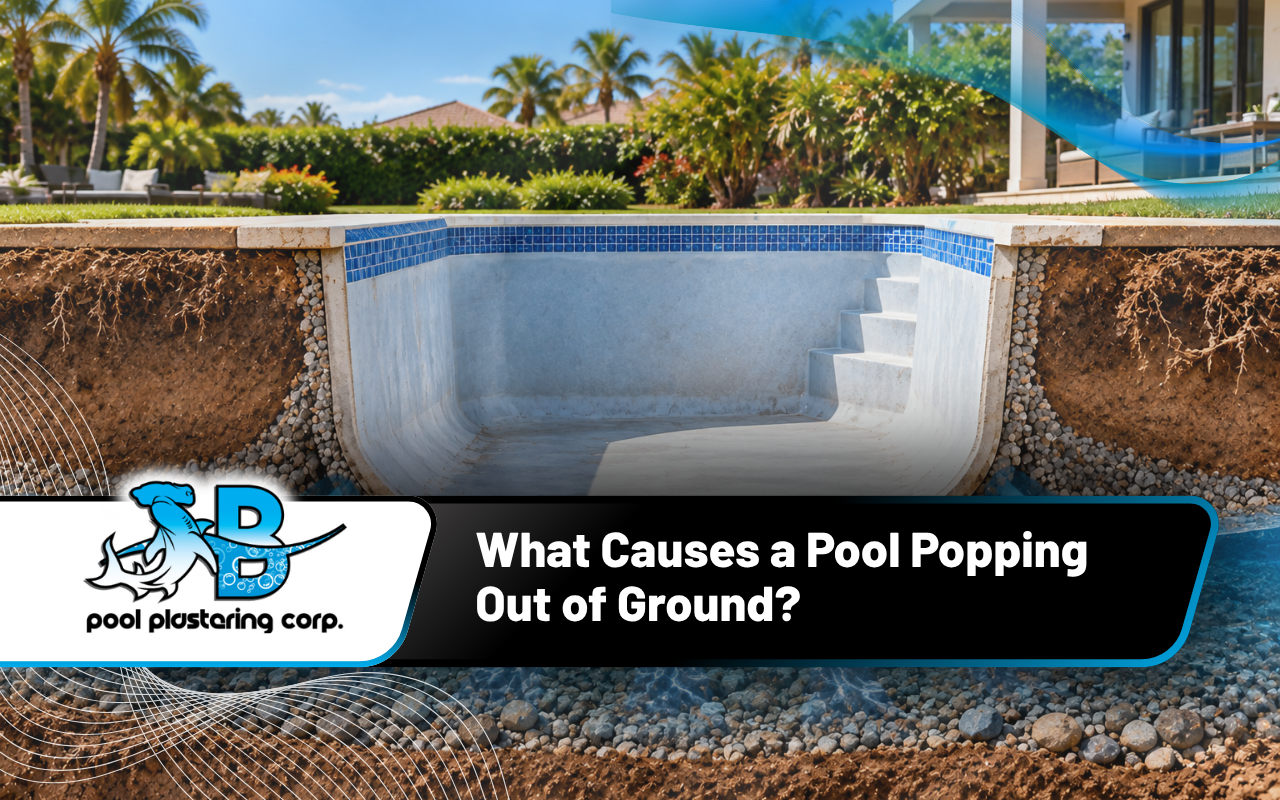
What Causes a Pool Popping Out of Ground?
- Groundwater can push upward against a pool shell.
- Draining removes water weight that helps resist that upward force.
- High groundwater, blocked relief paths, and unsuitable drainage can increase the risk.
- A pool popping out of ground needs structural assessment before repair or refilling.
A lifted shell is a structural problem that can affect plumbing, decking, and access around the pool. At JB Pool Plastering, we recommend treating visible movement as a reason to stop using the area. Our pool condition inspection guide helps you organize observations before discussing the damage.
Pool uplift occurs when pressure from groundwater overcomes the weight and resistance holding the shell in place. Owners planning to drain a pool, or seeing movement afterward, need to understand this risk. Preventing damage involves site assessment and pressure management, rather than simply repairing marks in the interior finish.
Understanding Pool Popping Out of Ground Explains Uplift Damage
An empty pool can act like a large vessel surrounded by water. When groundwater pushes upward strongly enough, the shell may rise, tilt, or crack. The event can happen during a maintenance project, even when the pool looked sound before it was emptied.
To understand what causes an empty pool to float, picture the missing weight of its stored water. Dry-looking paving does not reveal the groundwater level below the floor. A pool’s shape, construction, ground conditions, and drainage all influence the risk. Surface appearance cannot confirm safe groundwater conditions.
Our pool construction planning overview provides context for the shell and surrounding systems. AQUA Magazine’s Pressure Points discusses groundwater and pressure relief as construction concerns. We recommend reviewing the site history before draining, rather than treating uplift as a rare issue that only affects visibly wet yards.
Recognizing Site Conditions Reveals When Draining Needs Extra Caution
Heavy rain, poor drainage, nearby groundwater, and a history of settlement all warrant closer review before draining. No single observation proves that a pool will lift. However, several warning factors together make a professional assessment especially important before the water level changes.
- Recent rainfall or persistent wet ground near the pool.
- Known high groundwater or previous seepage into an empty shell.
- Missing records for relief valves, drains, or groundwater control.
- New gaps between coping, decking, and the pool edge.
- Unexpected shell movement during water removal.
We distinguish risk factors from proof of damage. A plaster hairline crack alone does not establish hydrostatic uplift. Record changes rather than guessing their cause. Photos taken before and after movement can help the assessment. At JB Pool Plastering, we recommend sharing the drain date and weather history alongside those images.
Checking Relief Systems Clarifies Their Purpose and Practical Limits
A hydrostatic relief valve can let groundwater enter a pool when pressure beneath the shell exceeds pressure inside it. That opening can reduce the pressure difference. The valve is a protective component, but its presence does not guarantee that draining is safe.
For a hydrostatic relief valve pool assessment, a qualified professional needs to identify the actual valve and its relief path. Designs differ, and debris can block parts of the system. The Illinois appellate court’s Huntington Club case documents a pool failure involving an obstructed groundwater relief path. A visible valve is not proof of a working system.
The valve does not normally send groundwater through the circulation equipment as a treatment method. Do not remove suction covers or reach into drain fittings yourself. We recommend checking construction records and leaving testing, access, or replacement to qualified personnel who understand the pool’s installed design.
Managing Groundwater Before Draining Helps Prevent Avoidable Shell Movement
Prevention starts with assessing groundwater and choosing a draining plan that accounts for the site. Some pools need dedicated groundwater control, while others need the work postponed. The correct method depends on the installation and cannot be selected from a general online checklist.
If you ask how to prevent a pool from lifting when drained, begin by arranging the contractor’s assessment. Avoid unnecessary empty periods, confirm weather conditions, and keep runoff away from the excavation. Groundwater control requires a site-specific plan. A pump inside the pool does not automatically reduce pressure outside it.
- Confirm the construction type and any available drainage drawings.
- Have relief and groundwater control arrangements assessed.
- Coordinate draining with work that is ready to proceed.
- Agree on stop conditions and responsibility for monitoring.
Before a project with JB Pool Plastering, raise any known groundwater or movement history so the surface plan can account for those concerns.
Assessing a Lifted Shell Separates Structural Repairs From Resurfacing
Structural assessment of a lifted shell should cover support, cracks, plumbing, and the surrounding deck before anyone decides on repairs. New plaster can renew an interior finish, but cannot move a shell back into position or correct unstable ground. Cosmetic work must follow the structural decision.
For a pool repair service in San Bernardino CA, explain whether the pool has risen, tilted, or developed new gaps. Start with our pool repair scope overview and request a project review. At JB Pool Plastering, we recommend clarifying when engineering or other specialist input is necessary.
Keep people away from unstable edges and exposed damage. Do not attempt to force the shell down. Do not refill a visibly displaced pool without professional direction. Repair feasibility varies by damage; some cases require major reconstruction. Ask for a written scope distinguishing structural work, plumbing repair, and the final interior finish.
Frequently Asked Questions
Can a partly drained pool also experience upward movement?
Yes. Lowering the water reduces its contribution to the pool’s weight, even if the shell is not fully empty. The remaining water level alone cannot establish safety. Groundwater pressure and the pool’s design must be considered together before choosing how far to drain.
Which records help assess an older pool before draining?
Construction drawings, repair records, drainage details, and past photos can help explain the installed system. Our construction stages and pool components gives useful context. If records are missing, tell the assessor instead of assuming the pool has a functioning relief arrangement.
Does water beside the pool always indicate dangerous groundwater?
No. A puddle can come from irrigation, surface runoff, or another source. However, repeated wet areas deserve investigation before draining. Use our inspection questions for pool owners to document when moisture appears and whether the surrounding ground or deck has changed.
Will my property insurance automatically cover damage from uplift?
Coverage depends on your policy, exclusions, and the circumstances of the damage. Do not assume that uplift or repair costs are covered. Take photos, preserve records, and contact your insurer for policy-specific guidance before removing evidence or authorizing major reconstruction work.
Can interior finish work begin before structural damage assessment?
It should wait until the structural problem and repair plan are clear. Review our repair planning for damaged pools to discuss the scope. Applying a new finish too early can hide evidence without correcting the movement, support failure, or damaged plumbing underneath.
Prioritizing Structural Review Protects Your Next Pool Repair Decision
If you suspect a pool popping out of ground, pause draining or repairs and secure the pool area. Share the movement history, photos, and any available construction records with JB Pool Plastering. We can discuss the surface project in the context of the damage. Request a project review before choosing a cosmetic repair that may leave structural questions unresolved.
References
- Pressure Points — AQUA Magazine
- Huntington Club Master Homeowners Association v. Platinum Poolcare Aquatech, Ltd.
Subscribe to Download Pool Maintenance 101 Guide
Fill the Form and Start Taking Care of Your Pool




Contact Us Now
Get Your Pool Quote!