What Pool Discoloration Causes Require Fast, Lasting Solutions?
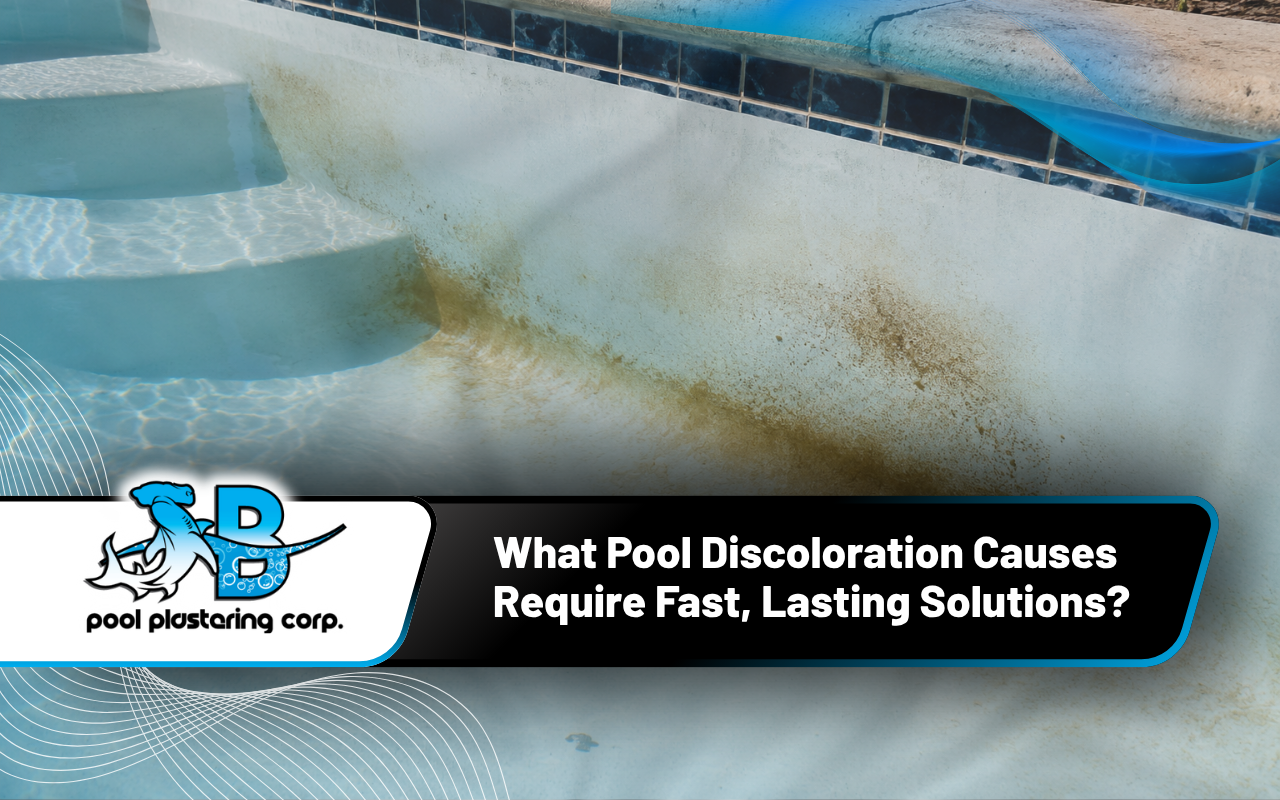
Pool discoloration causes commonly include dissolved metals, algae, calcium scale, unbalanced water, organic debris, and worn plaster. The right fix starts with testing the water and checking the stain’s color, texture, location, and response to brushing.
To get more information and support by expert get more details for Pool Surface Evaluation.
Visible Stain Patterns Reveal Common Discoloration Sources Early
The stain’s color, texture, and location often provide the first useful clues. However, appearance alone cannot confirm the cause. Pool owners should examine the water, steps, corners, walls, tile line, fittings, and floor before selecting a cleaner or changing the water chemistry.
At JB Pool Plastering, we begin by viewing the pool from several angles. Surface light can hide stains that become clear near the floor. We also note whether the mark is smooth, rough, spreading, or limited to one area.
- Brown or rust-colored marks may suggest iron, corroded fittings, leaves, or soil.
- Blue-green marks may indicate copper or another dissolved metal.
- Green, yellow, or black areas may point to algae growth.
- White, gray, or chalky patches may indicate calcium deposits.
- Uneven fading may show normal wear or pool finish discoloration.
Brown stains pool plaster surfaces often appear on steps, corners, and shallow areas first. Therefore, inspect those locations closely. You can also review our guide, Why Pool Steps Turn Brown, for more stain-identification details.
A stain that returns after brushing usually needs more than surface cleaning. Likewise, a rough or pitted area may hold minerals, dirt, or algae inside the finish.
Simple Water Tests Separate Metals, Algae, And Scale
Water testing helps separate chemical problems from damaged plaster. First, check sanitizer, pH, alkalinity, calcium hardness, and metals. Then compare those results with the stain’s appearance. This process reduces guessing and helps prevent treatments that could fade, etch, or further stain the surface.
Keep a written log of chemical additions, rain, heat, refilling, and heavy pool use. Consequently, you may notice when the discoloration began. A recent refill may introduce metals, while hot weather may increase sanitizer demand.
| Observed Sign | Possible Cause | Helpful Next Check |
|---|---|---|
| Brown or rust-colored streaks | Iron, corrosion, soil, or organic debris | Test metals and inspect nearby fittings |
| Green water with slippery walls | Possible algae growth | Check sanitizer, circulation, and filter condition |
| Clear green or blue-green water | Possible dissolved copper | Test metals before adding more oxidizer |
| White, rough deposits | Calcium scale or mineral buildup | Test pH, alkalinity, and calcium hardness |
| Uneven color with pits or roughness | Worn or damaged pool finish | Request a professional surface inspection |
Metal stains pool water and plaster after dissolved minerals react with sanitizer or changing pH. Therefore, adding more chlorine without testing may make some metal discoloration more visible.
Key Takeaway: Stain color offers a useful clue, but water testing confirms whether the likely source is metal, algae, scale, debris, or surface wear.
Balanced Pool Chemistry Prevents Recurring Surface Stains Safely
Balanced water reduces staining, corrosion, scaling, and sanitizer problems. However, one reading cannot explain every stain. Pool owners should test regularly, adjust chemicals in small steps, and follow product directions instead of applying several treatments at the same time.
The Centers for Disease Control and Prevention recommends maintaining pool pH between 7.0 and 7.8. This range supports chlorine performance, swimmer comfort, and pool equipment protection.
The same CDC guidance recommends at least 1 ppm of chlorine in pools. However, stabilizer use can change the recommended minimum. Therefore, follow current public-health guidance and your product label.
JB Pool Plastering checks how water balance may be affecting the finish. We also explain which findings suggest a temporary chemistry problem and which signs indicate surface damage.
- Test the water before adding stain-removal products.
- Adjust pH and alkalinity gradually.
- Keep sanitizer within the recommended range.
- Clean baskets and filters to support circulation.
- Record each chemical adjustment and test result.
Testing and adjusting one factor at a time makes the results easier to understand. Moreover, it lowers the risk of creating a second water-balance problem.
Controlled Calcium Levels Reduce Cloudiness And Rough Deposits
Calcium deposits usually appear as white, gray, or pale rough patches. They may form near the waterline, steps, fittings, or plaster. Although brushing can remove light residue, widespread scale needs water testing and careful correction before stronger surface treatment is considered.
Water hardness is mainly linked to dissolved calcium and magnesium compounds, according to the United States Environmental Protection Agency. Therefore, fill water can affect mineral buildup before any pool chemicals are added.
Do not lower pH aggressively without a clear plan. Very low pH can damage plaster and metal parts. Instead, confirm the readings and use products made for the pool’s surface and water conditions.
For light mineral buildup, follow these practical steps:
- Test pH, alkalinity, and calcium hardness.
- Inspect the filter and confirm steady circulation.
- Brush the affected area with a surface-safe brush.
- Use a suitable scale-control product when recommended.
- Retest the water before making another adjustment.
A pumice stone may be suitable for some plaster areas. However, it can damage tile, vinyl, fiberglass, and delicate finishes. Therefore, confirm the surface type before using abrasive tools.
Key Takeaway: Balanced chemistry helps prevent stains, while controlled calcium and steady circulation reduce cloudy water and rough mineral deposits.
Consistent Cleaning Limits Algae And Organic Discoloration
Algae and organic debris can create green, yellow, brown, or black marks. These problems develop faster when sanitizer falls, circulation weakens, or leaves remain in the water. Prompt brushing, cleaning, testing, and filtration can stop light discoloration before it settles into porous plaster.
The CDC advises homeowners to test chlorine and pH at least twice each day. More frequent testing may be needed when many people use the pool.
Algae may feel slippery and can spread beyond one isolated mark. In contrast, a metal stain usually stays attached to the surface and does not brush away like fresh growth.
- Remove leaves, dirt, and other organic material quickly.
- Brush walls, steps, corners, and shaded areas each week.
- Empty skimmer and pump baskets regularly.
- Clean or backwash the filter when needed.
- Check that return jets support movement across the pool.
Black spots require careful identification because algae can settle into worn or porous plaster. Our guide, Black Spots in Pool, explains common causes and practical removal considerations.
JB Pool Plastering inspects recurring dark spots before recommending cleaning or repair. This review helps us distinguish surface growth from staining trapped inside weakened plaster.
Professional Surface Evaluation Guides Repair Or Replaster Decisions
A professional evaluation becomes useful when stains return, plaster feels rough, pits appear, or discoloration covers large areas. Cleaning may improve a surface-level stain. However, deep staining and failing plaster may require resurfacing to restore a smooth, even, maintainable interior.
Pool finish discoloration does not always mean the entire surface has failed. Therefore, we inspect the stain depth, texture, cracks, delamination, and overall finish condition before discussing repair options.
Consider a professional evaluation when you notice:
- Stains that return soon after treatment
- Rough areas that hold dirt or algae
- Visible pits, cracks, peeling, or hollow sections
- Widespread fading or uneven surface color
- Metal staining linked to corroded pool equipment
Acid washing is not a routine cleaning method. It removes a thin surface layer and may shorten plaster life when repeated. Therefore, it should only follow a careful evaluation of the finish.
For persistent surface damage, explore Pool Replastering Services in Rancho Cucamonga. A pool replaster in Rancho Cucamonga, CA may provide a longer-lasting solution when cleaning cannot restore damaged plaster.
JB Pool Plastering explains the surface condition, suitable finish choices, preparation steps, and expected care. As a result, homeowners can compare maintenance, repair, and resurfacing with clearer information.
Key Takeaway: Routine cleaning can control surface growth, but returning stains, rough plaster, and widespread damage often need professional inspection.
Careful Diagnosis Restores Clear Water Without Costly Guesswork
A safe correction plan begins with diagnosis, not a strong chemical treatment. Pool owners should identify the stain, test the water, check circulation, inspect equipment, and record recent changes. Then they can select the least aggressive solution that matches the confirmed problem.
Use this order when addressing minor discoloration:
- Photograph the stain in natural light.
- Check whether the mark feels smooth, rough, or slippery.
- Test sanitizer, pH, alkalinity, calcium hardness, and metals.
- Inspect baskets, filters, fittings, and return flow.
- Brush a small area with the correct surface-safe tool.
- Retest the water after any chemical correction.
- Request an inspection when the stain returns or spreads.
Never mix pool chemicals together. Likewise, never add water directly into concentrated chemicals unless the product directions specifically require that method. Follow every safety label and keep swimmers out during treatment.
Pool discoloration causes become easier to manage when each observation and test result is documented. This method also helps a pool professional understand what treatments were already attempted.
Frequently Asked Questions
How do I know whether a brown stain is metal?
Brown or rust-colored staining may come from iron, corrosion, soil, or organic debris. Test the water for metals and inspect nearby fittings first. For stains concentrated on steps, review Why Pool Steps Turn Brown.
What happens if I add chlorine to metal-stained water?
Chlorine can oxidize dissolved metals and make their colors more visible. Therefore, test for iron and copper before adding a large oxidizer dose. A metal-control product may be needed, depending on the confirmed water conditions.
When should I consider replastering a discolored pool?
Consider replastering when stains cover large areas, plaster feels rough, or cracks and pits continue growing. A professional inspection can confirm whether cleaning remains suitable. Learn about Pool Replastering Services in Rancho Cucamonga.
Why is my pool green after adding chemicals?
Green water may come from algae or oxidized copper. Slippery walls and weak sanitizer often suggest algae. Clear green water after chemical treatment may suggest metal oxidation. Test both sanitizer and metals before adding another product.
How do I prevent discoloration from returning?
Test the water regularly, maintain circulation, brush the pool, remove debris, and clean the filter. Also inspect metal fittings for corrosion. When stains keep returning, use Request a Pool Surface Evaluation to arrange professional guidance.
Scheduled Surface Care Protects Your Pool’s Lasting Appearance
Early testing and careful inspection can stop small stains from becoming lasting surface problems. JB Pool Plastering can identify likely pool discoloration causes and explain practical next steps. Therefore, Request a Pool Surface Evaluation when discoloration returns, spreads, or appears beside damaged plaster.
References
- Home Pool and Hot Tub Water Treatment and Testing
- Wastewater Technology Fact Sheet Chemical Precipitation
Subscribe to Download Pool Maintenance 101 Guide
Fill the Form and Start Taking Care of Your Pool




Contact Us Now
Get Your Pool Quote!