When Should You Decide When To Replaster Pool In California?
You should decide when to replaster pool in California by checking surface age, rough texture, deep stains, cracks, flaking, and exposed material. Most plaster lasts several years, but California weather, water balance, and daily use can shorten or extend that timeline.
Pool replastering replaces the worn interior finish that protects the pool shell and keeps the surface comfortable. Homeowners need it when the finish becomes rough, stained, cracked, thin, or hard to clean. The goal is to restore a smoother swimming surface and reduce future surface problems.
it may be time to compare the surface with Time to Resurface a Pool before damage spreads.
California Conditions Shorten Pool Plaster Lifespan Over Time
Pool plaster lifespan depends on sunlight, water chemistry, cleaning habits, finish quality, and how often the pool is used. In many cases, traditional plaster lasts about seven to fifteen years, but visible condition matters more than age alone.
Constant California sun can fade color and dry out exposed areas near steps, benches, and shallow edges. Also, long swim seasons create more brushing, chemical use, and foot traffic. At JB Pool Plastering, we look at both age and surface condition before recommending the next step.
- Well-balanced water can help the finish last longer.
- Strong sun exposure can speed up fading.
- Heavy use can wear down high-contact areas.
- Poor chemical balance can cause roughness or stains.
The National Plasterers Council explains that balanced water helps prevent etching and scaling on pool finishes. That is why regular surface checks are useful before plaster reaches severe deterioration.
Visible Signs Pool Needs Replastering Guide Smart Decisions
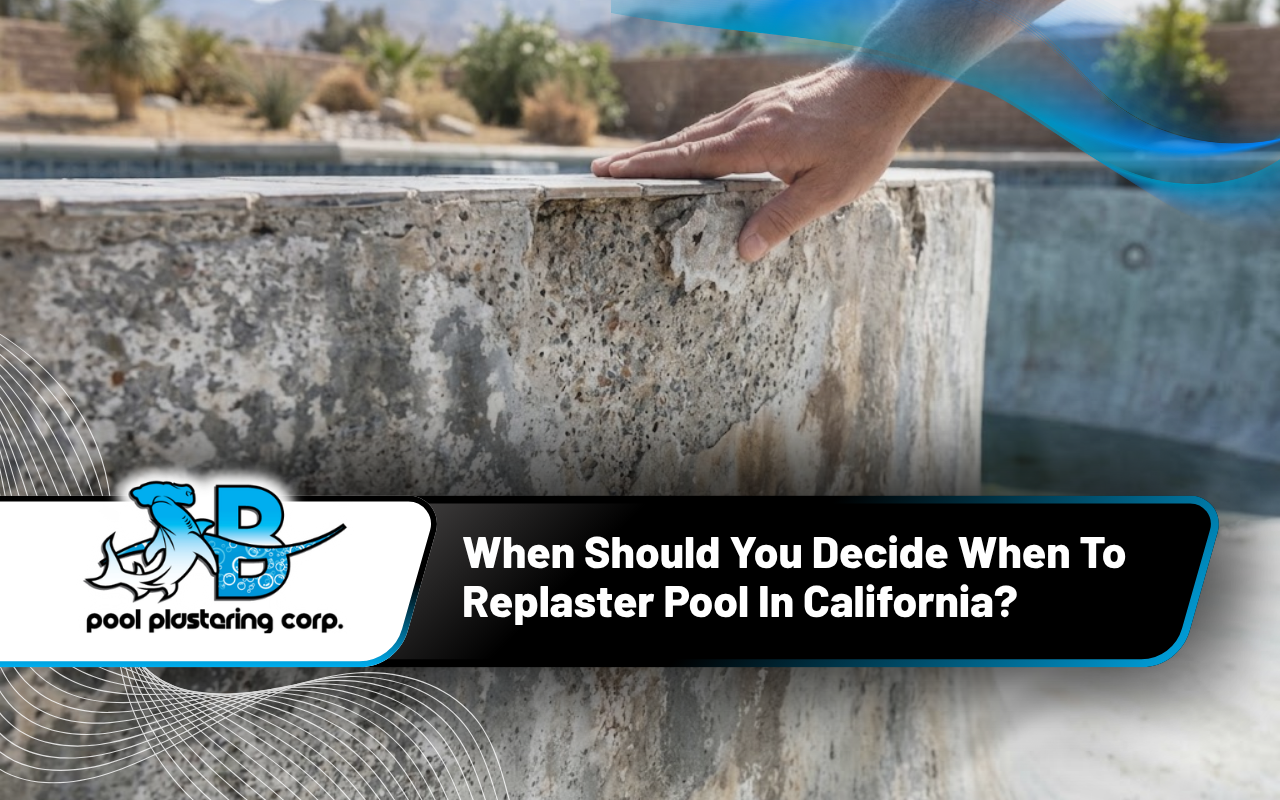
Signs pool needs replastering often appear as rough plaster, deep stains, cracks, flaking, fading, or exposed material. These signs show the finish may no longer protect the surface well or feel comfortable for swimmers.
Rough areas are often the first clue. A healthy plaster surface should feel fairly smooth under your feet and hands. If the pool feels sharp, sandy, or uneven, the top layer may be wearing away. In addition, porous plaster can hold dirt and algae more easily.
- Rough texture that keeps spreading
- Stains that do not improve after cleaning
- Cracks, chips, or peeling plaster
- Dark patches or exposed base material
- Uneven fading across walls or floors
When customers contact JB Pool Plastering, we ask where the damage appears and how long it has been visible. Those details help us understand whether the issue is isolated or part of wider surface wear.
Surface Age Clarifies How Many Years Between Pool Replasters
How many years between pool replasters depends on maintenance, water balance, material quality, and California exposure. A pool may need replastering earlier than expected if roughness, staining, or worn-through areas appear before the usual lifespan ends.
Age is helpful, but it should not be the only guide. Two pools built the same year can age very differently. One may stay smooth because water chemistry was controlled. Another may become rough sooner because acidic water, mineral buildup, or sun exposure damaged the finish.
With JB Pool Plastering, you get guidance based on the pool’s real condition, not only a calendar. If the plaster is older and several warning signs appear together, planning a Pool Replaster Timing review can help you avoid waiting too long.
CDC home pool guidance reminds pool owners to regularly check chlorine and pH. That simple habit supports safer water and also helps reduce avoidable stress on pool surfaces.
Pool Re-Plaster Service Restores Comfort And Surface Protection
A pool re-plaster service can restore a worn interior finish when cleaning, brushing, or chemical correction no longer solves the problem. The process gives the pool a fresh surface and helps protect the structure beneath the plaster.
Before work begins, the pool surface must be reviewed carefully. During a project review with JB Pool Plastering, we check rough areas, stains, cracks, exposed spots, and previous repairs. Then we explain what needs attention before the new finish is applied.
Common reasons to schedule a professional review include:
- Plaster feels uncomfortable on feet or hands.
- Stains return soon after cleaning.
- Cracks or chips keep growing.
- Exposed areas appear near steps or benches.
- The finish looks thin, faded, or uneven.
A professional inspection helps you decide whether maintenance is still enough or whether a fresh plaster finish is the better long-term step.
Booking A Replaster Review Prepares Your Pool Properly
The replaster process starts with clear questions, surface review, and a practical explanation of the work needed. Good planning helps homeowners understand preparation, surface repair needs, finish options, and early care after the pool is refilled.
When you reach out, we first ask about the pool age, visible damage, stains, rough spots, and previous surface work. After that, the pool may need an on-site review so the finish can be checked more closely. Before work begins, we explain what the surface needs and what steps may follow.
- We ask about damage, age, and surface history.
- We review roughness, cracks, stains, and exposed areas.
- We explain practical options before work begins.
- The pool is prepared so the new finish can bond.
- After refilling, water care matters during early curing.
If your pool is in the San Bernardino area, Pool Re-plaster in San Bernardino, CA can help you understand local service options.
Frequently Asked Questions
How long does pool plaster usually last in California?
Pool plaster often lasts about seven to fifteen years, but care and climate matter. Sun exposure, water chemistry, cleaning habits, and use can change the timeline. If roughness, stains, or cracks appear early, review Pool Replaster Timing before the damage spreads.
What stains suggest my pool needs new plaster?
Stains that stay after proper cleaning may suggest worn or porous plaster. Dark areas, gray patches, rust-colored marks, or uneven fading can show deeper surface wear. Staining matters more when it appears with rough texture, cracks, flaking, or exposed material.
Can rough pool plaster become unsafe for swimmers?
Yes, rough plaster can feel uncomfortable and may scrape feet, hands, or swimwear. It can also hold dirt and algae more easily. If texture keeps spreading, compare your symptoms with Time to Resurface a Pool and schedule a surface review.
Should I replaster before exposed concrete appears?
It is often better to act before exposed material appears. Exposed spots show the plaster layer has worn very thin. Earlier attention may help avoid wider deterioration and make the next surface project easier to plan.
Who should I contact for a pool surface review?
You should contact a team that can inspect the plaster, explain visible damage, and guide you through practical options. When you are ready to discuss your pool, use the Contact JB Pool Plastering page to share details and request guidance.
Plan Your Pool Surface Review With Confidence
Knowing when to replaster pool in California helps you protect comfort, appearance, and surface life. When you are ready, contact JB Pool Plastering to describe the signs you see, ask about your options, and start a clear Contact JB Pool Plastering request.
References
Subscribe to Download Pool Maintenance 101 Guide
Fill the Form and Start Taking Care of Your Pool




Contact Us Now
Get Your Pool Quote!