Why Black Spots in Pool Plaster in Southern California Return?
Dark marks on a pool surface often appear after heat, hard water, and missed brushing work together. For Southern California homeowners, those marks can be staining, algae, or worn plaster. Our surface stain guide explains common warning signs, and this article shows what to check before the damage spreads.
Why Black Spots in Pool Plaster in Southern California Return?
Black spots in pool plaster in Southern California return when algae, metals, scale, or weak plaster stay inside porous surfaces. The best next step is to test water, brush the area, identify the stain type, and schedule repair when spots keep coming back after cleaning.
Pool stain repair for dark plaster marks involves checking chemistry, brushing texture, stain behavior, and surface age. Homeowners need it when dark spots resist normal cleaning or return quickly. The goal is to separate algae from mineral staining, then choose cleaning, resurfacing, or repair steps that protect the pool finish.
Black Spots in Pool Plaster in Southern California Reveal Risks
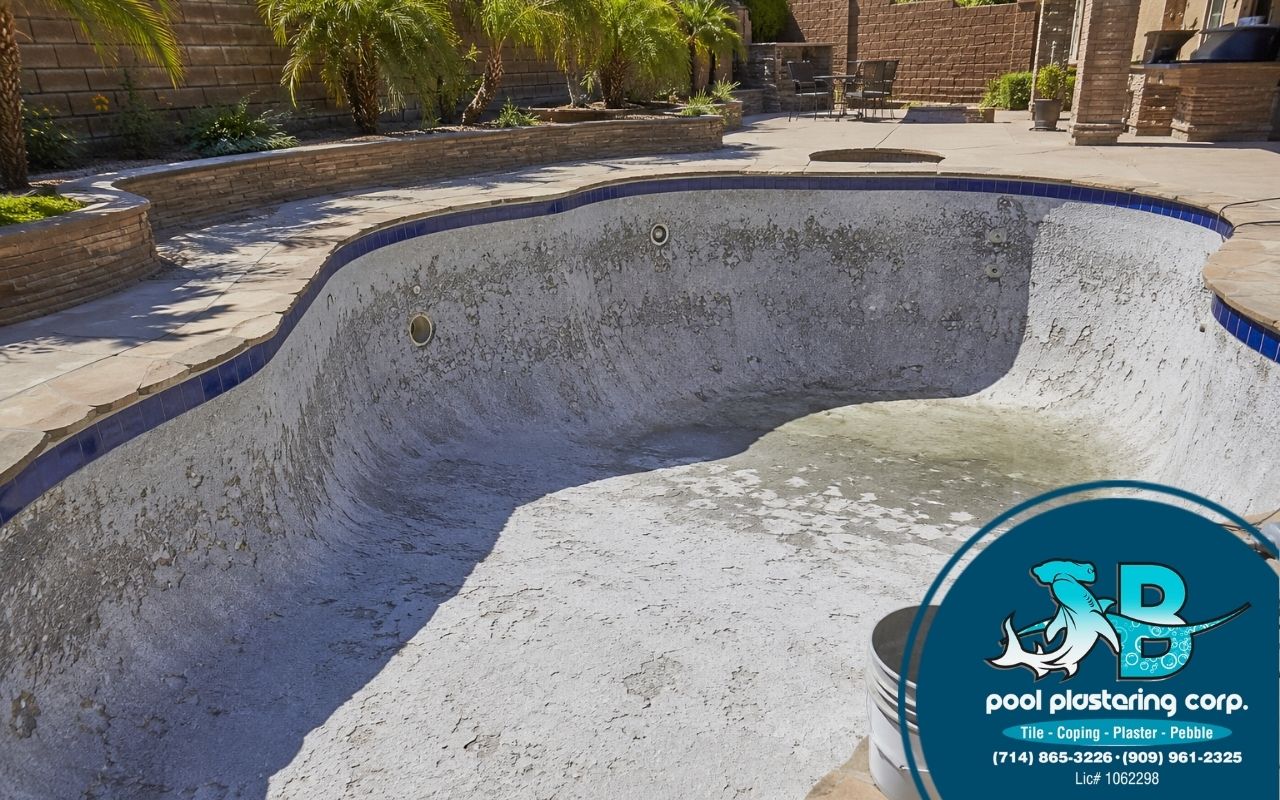
Dark plaster marks can show algae growth, metal staining, scale buildup, or plaster wear. In our area, sun, warm water, and hard water can make these problems more visible. At JB Pool Plastering, we inspect the surface closely before suggesting cleaning or repair.
Black spots in pool plaster in Southern California should not be ignored when they keep spreading. A small stain may sit on the surface, but a deeper mark can settle into pores and rough areas. Watch for these signs before the pool finish gets worse:
- Spots that return after brushing
- Dark patches near steps, corners, or shaded walls
- Rough plaster that traps dirt and algae
- Stains that do not fade after normal cleaning
Black Algae in Pool Plaster in Inland Empire Signals Growth
Black algae in pool plaster in Inland Empire pools often looks like small dark dots with strong roots. The warm climate helps algae attach to rough plaster, especially when sanitizer runs low or circulation is weak. Brushing alone may loosen the top layer, not the deeper growth.
Because black algae can cling tightly, the pool needs steady cleaning, balanced sanitizer, and close surface checks. The CDC notes that chlorine and pH are the first defense against germs in treated water. When homeowners contact JB Pool Plastering, we ask what cleaning steps were tried and how fast the spots returned.
Fast regrowth usually points to a deeper surface problem or a chemical issue that needs correction.
Balanced Water Chemistry Reduces Stains and Plaster Damage
Balanced water helps protect plaster because pH, alkalinity, calcium hardness, and sanitizer affect the surface. When these levels drift, metals can stain, scale can form, and algae can grow faster. The California Department of Public Health lists public pool requirements and laws that highlight the need for water oversight.
Some homeowners search for a black spot causes pool chemistry imbalance problem. In practice, poor chemistry often allows the spot to form. Hard Southern California water can also leave scale that traps algae and minerals. Check these basics before applying strong cleaners:
- pH that stays outside the safe range
- Low sanitizer after heat, rain, or heavy use
- High calcium hardness or visible scale lines
- Metals from source water or old equipment
With JB Pool Plastering, you get clear guidance before repair work begins, especially when stains connect to worn or etched plaster.
Simple Removal Steps Improve Stain Control Before Repairs
Safe cleaning starts by matching the method to the stain type. Algae usually needs brushing, sanitizer support, and repeat checks. Mineral stains may need a different product. When customers ask how to remove black spots from pool finish, we first explain why testing matters.
Do not mix chemicals or scrub damaged plaster with the wrong tool. Start with a small test area and avoid draining the pool without advice. Helpful steps include:
- Brush the area with the right pool brush
- Test pH, chlorine, alkalinity, and hardness
- Clean filters and skimmer baskets
- Retest water before anyone swims
- Ask for help when stains stay fixed
Our Riverside surface renewal page can help homeowners compare repair and replastering options.
Scheduled Pool Review Prepares Your Surface for Repair
A pool review helps decide whether cleaning, spot treatment, or resurfacing is the better choice. A pool replastering contractor Riverside CA black spot repair request usually starts with stain history, surface age, and photos. Before scheduling work with JB Pool Plastering, customers can share what they have already tried.
The repair process is simple and customer-focused. We avoid guessing because black spots may come from more than one cause. During the review, we look for deep staining, rough plaster, scale, algae regrowth, and surface breakdown.
- We ask about water balance and recent treatments
- We review the stain pattern and surface condition
- We explain cleaning, repair, or replastering choices
- We prepare the pool surface based on the chosen work
To plan the next step, use our pool project contact page and send details about the stains.
Frequently Asked Questions
Can black pool spots come back after brushing?
Yes, black spots can return when algae roots, metals, or rough plaster remain below the surface. Brushing removes loose material, but it may not solve deeper causes. Review our surface stain guide if stains reappear after routine cleaning.
Does hard water make black plaster stains worse?
Hard water can make stains worse because calcium scale creates rough areas on plaster. Those areas can hold minerals, debris, and algae. Regular testing, brushing, and scale control help reduce buildup before dark spots become harder to remove.
When should I consider replastering my pool surface?
Consider replastering when stains stay fixed, plaster feels rough, or dark marks return after proper cleaning. Surface wear can make algae and minerals harder to control. Our Riverside surface renewal information explains what homeowners can review before planning work.
Can poor circulation help black algae grow deeper?
Yes, poor circulation can leave dead spots where sanitizer does not move well. Corners, steps, and shaded walls often show the first signs. Running equipment correctly, cleaning filters, and brushing low-flow areas can help reduce algae pressure.
Should I drain my pool for black stains?
Do not drain your pool without guidance, because draining can damage some pools or expose weak plaster. Testing and inspection should come first. Use the pool project contact page to ask what information we need before recommending the next step.
Clear Next Steps Protect Your Pool Finish Longer
Black spots in pool plaster in Southern California are easier to manage when the cause is clear. For homeowners who choose JB Pool Plastering, we guide the next step with surface checks, practical repair options, and simple preparation. Start with our pool project contact page when stains keep returning.
References
Subscribe to Download Pool Maintenance 101 Guide
Fill the Form and Start Taking Care of Your Pool




Contact Us Now
Get Your Pool Quote!