How to Acid Wash a Pool Without Damaging Plaster?
- Assess the stain and finish before choosing acid washing.
- Have qualified personnel plan draining, chemical handling, and wastewater disposal.
- Use the approved product procedure on controlled sections, then rinse and manage residue.
- Learning how to acid wash a pool includes recognizing that acid removes some surface material.
Stubborn discoloration does not always need aggressive treatment. At JB Pool Plastering, we recommend identifying the stain and remaining finish condition first. Review our pool stain cause guide before deciding whether cleaning can help or the surface has deteriorated beyond a useful treatment.
Acid washing is a chemical cleaning method for suitable cement-based pool finishes. It can remove some deposits and staining by attacking a thin surface layer. Owners considering it need a condition assessment, because the treatment also consumes finish material and cannot rebuild plaster that has already worn away.
Evaluating Stains First Prevents Unnecessary Loss of Sound Plaster
For certain persistent surface deposits or stains, acid washing is a possible option, but it is not a universal cleaning method. The stain type, finish material, and remaining plaster condition determine suitability. We recommend considering targeted or less aggressive treatment before a whole-pool wash.
PoolPro’s article on the National Plasterers Council startup procedure warns against assuming draining and acid washing solve every stain. Identify the cause before choosing treatment. Metal staining, organic marks, mineral deposits, and finish color variation may need different responses. A treatment that improves one problem can worsen another.
For dark spots, review our dark pool spot assessment rather than assuming the marks all share a cause. At JB Pool Plastering, we recommend bringing clear images and recent water tests to the discussion. Previous washes also matter because they may have reduced the material available for another treatment.
Understanding How to Acid Wash a Pool Requires Preparation
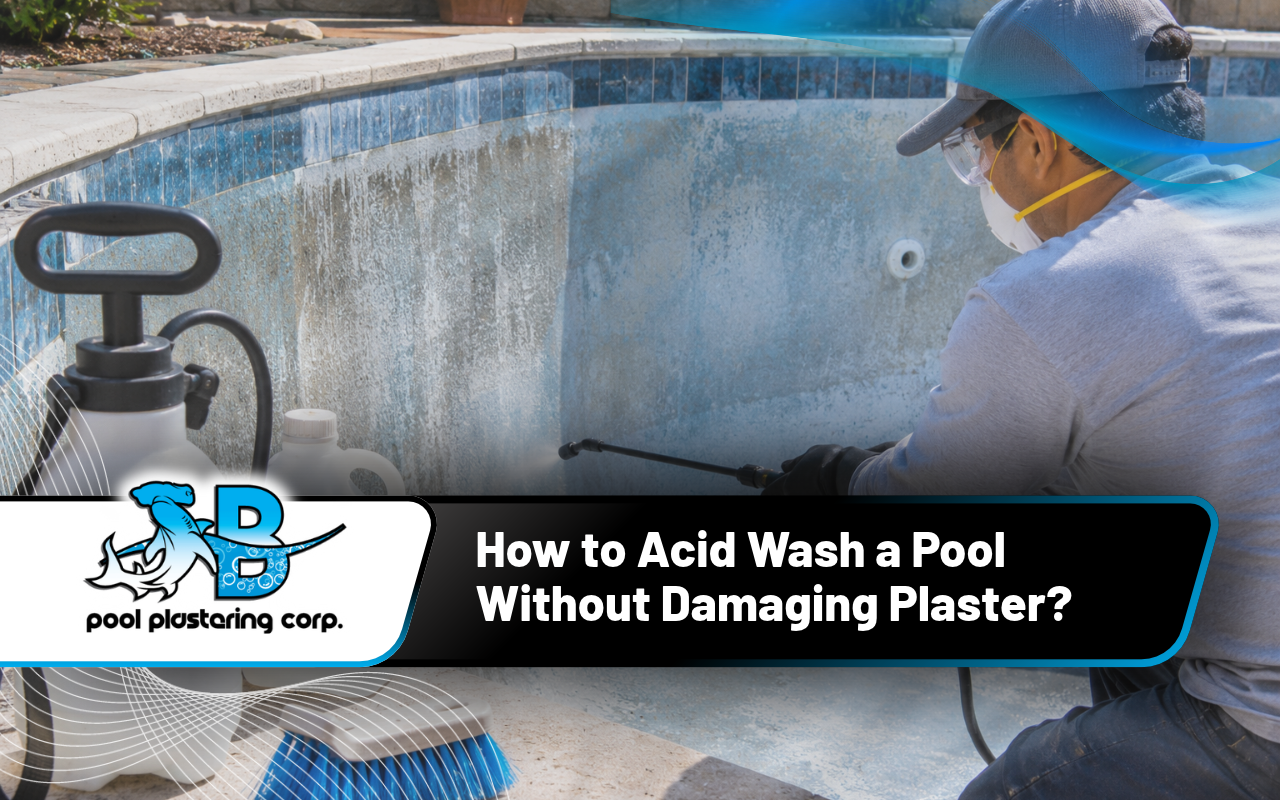
A traditional drained acid wash involves more than applying cleaner. Planning must cover the pool’s suitability for draining, protection of adjacent materials, trained chemical handling, and the disposal of acidic residue. The treatment should not begin until the finish and site conditions have been reviewed.
- Confirm the surface type and condition, including previous acid treatments.
- Evaluate draining risks and approve the discharge and waste route.
- Secure the area and protect tile, fittings, and nearby surfaces.
- Review the product label, safety data, equipment, and emergency arrangements.
The CDC’s Pool Chemical Safety guidance emphasizes trained handling and preventing chemical mixing. Never mix acid with chlorine products. If the label requires dilution, add acid to water, not water to acid. A paper dust mask does not control acid fumes. Required protection and ventilation must match the product and job conditions.
When discussing how to acid wash a plaster swimming pool, ask who manages every preparation and disposal step.
Controlling Application and Rinsing Limits Uneven Etching Across Sections
The cleaning stage needs controlled application, limited contact, prompt rinsing, and collection of residue under the chosen procedure. Concentration and contact time depend on the product and finish. A single mixing ratio or fixed waiting period cannot be safely applied to every plaster pool.
- Check a small suitable area before broad application.
- Prepare the surface according to the approved method.
- Apply the selected product to manageable sections.
- Rinse within the required contact window and avoid dry residue.
- Collect and treat wastewater for the authorized disposal route.
- Inspect the result before repeating any treatment.
These steps explain the professional workflow; they do not replace the product instructions. Stronger acid can remove more plaster. Neutralized waste still needs approved disposal. Do not pour residue into the yard or a street drain. During project planning, clarify whether the finish needs cleaning or a broader repair assessment.
Assessing Repeated Treatments Separates Cosmetic Improvement From Surface Damage
An acid wash can expose a cleaner-looking layer while also reducing or roughening the finish. That tradeoff makes the remaining plaster condition important. Repeated washing is not ordinary annual maintenance, and a calendar interval alone cannot determine when another treatment is appropriate.
If you ask how often can you acid wash a pool, the useful answer is condition-based: only when justified and compatible. Keep records of earlier washes and discuss alternatives. To the question does acid washing damage pool plaster, remember that removal of surface material is part of the process. Appearance improvement does not restore lost thickness.
Our routine plaster maintenance guide covers ongoing care that can reduce the need for aggressive intervention. At JB Pool Plastering, we recommend reviewing chemistry, brushing, and the source of recurring staining. Repeating a wash without correcting the cause can leave a thinner finish and the same returning problem.
Reviewing Worn Finishes Clarifies When Cleaning Cannot Restore Them
Cleaning cannot rebuild missing plaster, reattach widespread loose material, or repair a moving shell crack. When those defects are present, the next decision involves repair or renewal rather than a stronger wash. A project discussion should distinguish the stain from the condition of the surface beneath it.
For pool replastering in San Bernardino CA, gather photos showing rough areas, missing material, and recurring stains. Our San Bernardino pool finish renewal page provides a relevant starting point. Explain what earlier cleaning achieved and how quickly the marks returned.
Before choosing work with JB Pool Plastering, ask whether the proposed scope is cleaning, patching, or replacement of the interior finish. Keep those outcomes separate. Discuss safe draining and refill responsibilities if renewal is necessary. The assessment should help you avoid spending on chemical treatment that cannot address the underlying loss of material.
Frequently Asked Questions
Can acid washing fix cracks that extend into the shell?
No. Acid washing is a surface treatment and cannot stabilize a structural crack or stop movement. A crack that changes, leaks, or reaches the shell needs a separate assessment. Cleaning over it may change appearance without resolving the underlying cause or preventing further damage.
Will every dark pool spot respond to an acid wash?
No. Dark marks may have different causes, including staining or biological growth, and need identification before treatment. Our black spot identification overview gives context. Describe the location and behavior of the marks rather than selecting acid solely because the color looks severe.
Which maintenance records should I keep after surface cleaning?
Save dated water tests, product details, photographs, and a record of any acid washing. Use our ongoing pool plaster care as a starting point. Those records make it easier to understand recurring marks and assess whether future chemical treatment would remove too much finish.
Does worn plaster always become smooth after acid washing?
No. Acid can expose aggregate or increase roughness when the surface is already worn. Consider San Bernardino replastering guidance if material is missing or extensively deteriorated. A cleaner color and a sound, comfortable interior finish are different outcomes that require separate evaluation.
Is a recently plastered pool ready for aggressive stain removal?
Do not assume so. New finishes have specific startup requirements and are sensitive to unsuitable treatment. Contact the applicator about early discoloration before acid washing. Identify the cause and follow the finish instructions instead of treating new plaster like an older surface undergoing restoration.
Choosing Necessary Treatment Preserves More of Your Existing Finish
Before deciding how to acid wash a pool, establish what caused the stain and whether enough sound plaster remains. With JB Pool Plastering, you can discuss surface concerns and compare the need for cleaning, repair, or renewal. Bring prior treatment records and current photos. Review your plaster condition before committing to a treatment that removes more material.
References
Subscribe to Download Pool Maintenance 101 Guide
Fill the Form and Start Taking Care of Your Pool




Contact Us Now
Get Your Pool Quote!