How Does Summer Plaster Preparation Protect Your Pool Finish?
Warm weather can expose rough plaster, stains, and scale faster than many pool owners expect. Before swim season gets busy, a careful check helps you fix small problems, balance the water, and protect the surface. This guide explains simple steps that make your pool smoother, cleaner, and easier to enjoy.
How Does Summer Plaster Preparation Protect Your Pool Finish?
Summer plaster preparation protects your pool finish by finding surface damage early, cleaning buildup, balancing water chemistry, and reducing scale risk before heavy swimming begins.
Pool plaster care includes checking the interior finish, cleaning stains, fixing small defects, and keeping the water balanced. Homeowners need this service when the pool feels rough, looks stained, or shows scale. The goal is to stop minor plaster wear before summer heat and daily use make damage worse.
Summer Plaster Preparation Builds A Smoother Swim Season
Early preparation gives your pool a better start because plaster problems are easier to handle before summer use increases. Summer plaster preparation helps reduce rough spots, stains, scale buildup, and water chemistry stress that can affect comfort and surface life.
Pool plaster reacts to water conditions, cleaning habits, and seasonal heat. Therefore, the best time to prepare is before the pool becomes part of your daily routine. At JB Pool Plastering, we start by looking for visible wear and signs that the surface may need extra care.
- Rough areas can feel sharp under bare feet.
- White deposits may point to early mineral scale.
- Dark stains can show algae, metal, or old dirt buildup.
- Small pits may collect debris and become harder to clean.
Expert Tip: 🏊 Check the surface before swim season gets busy.
A clean and smooth surface makes pool care easier all season. For more help with routine care, review How to Maintain Pool Plaster.
Plaster Surface Inspection Finds Early Pool Finish Damage
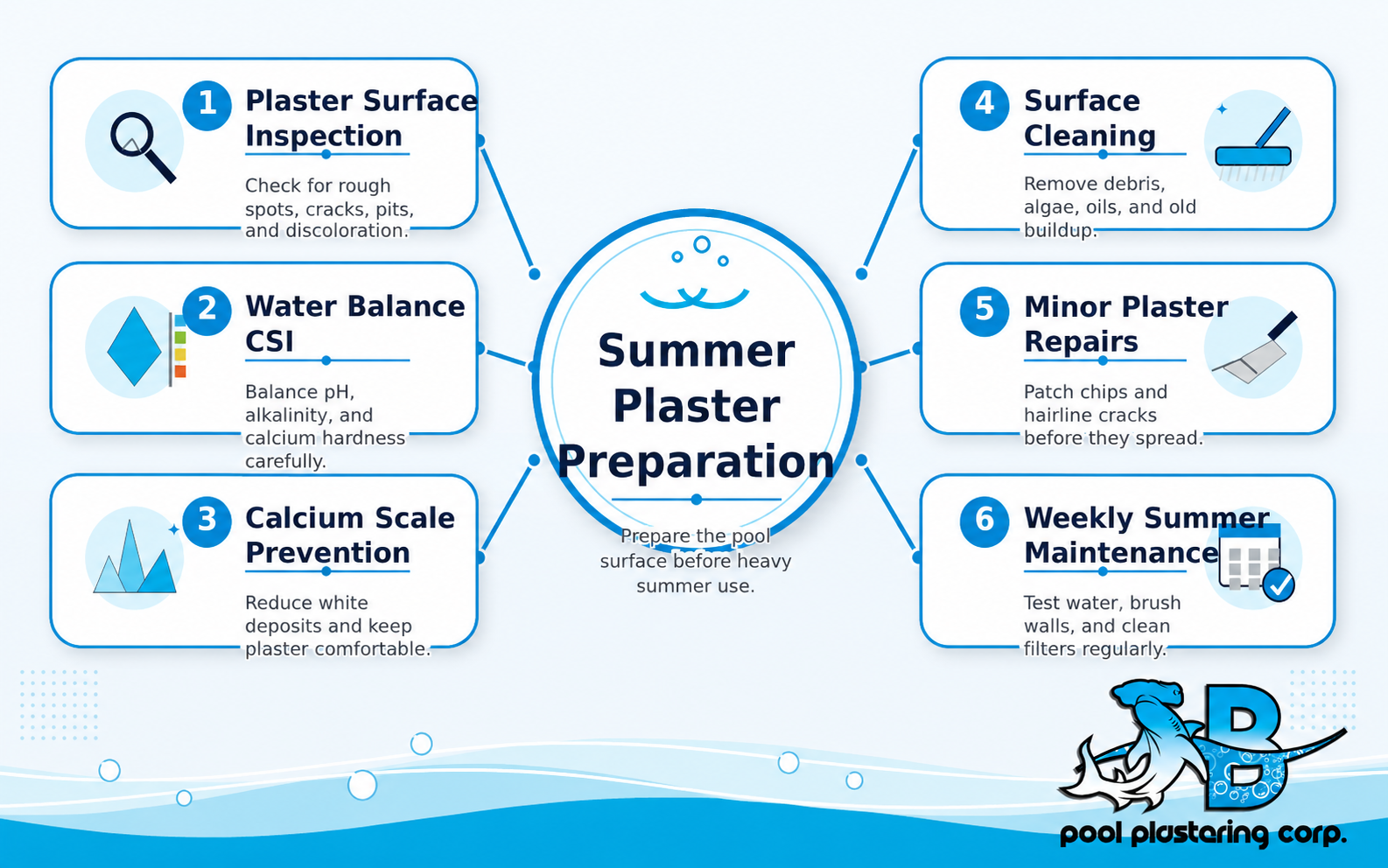
A plaster surface inspection helps you locate cracks, pits, chips, discoloration, and worn spots before they spread. This step gives you a clear repair plan and helps prevent surprise problems when the pool is already in heavy summer use.
Start by walking around the pool edge during bright daylight. Look closely at steps, corners, benches, shallow areas, and the waterline. These spots often show damage first because they get more traffic, sun, and chemical exposure.
- Check steps for uneven texture or small chips.
- Look at corners for cracks or dark buildup.
- Touch rough areas gently to confirm surface wear.
- Take photos of stains, pits, and worn areas.
- Write down each problem and its location.
Expert Tip: 📸 Take photos of flaws before planning repairs.
Photos help compare changes over time. They also help our team understand your concern before a visit. If the surface has large cracks, wide stains, or exposed areas, read Time to Resurface a Pool for clear warning signs.
Water Balance CSI Preserves Fresh Plaster From Damage
Water balance CSI helps show whether pool water may form scale or become aggressive toward plaster. Balanced water protects the finish because pH, alkalinity, calcium hardness, temperature, and dissolved solids all affect the pool surface together.
Testing only one number can miss the bigger picture. For example, calcium hardness may look acceptable, but high pH and alkalinity can still create scale. The National Plasterers Council explains that water balance helps prevent scale-forming or corrosive water conditions.
- pH should stay in a safe working range for comfort and surface care.
- Total alkalinity helps control sudden pH movement.
- Calcium hardness helps protect plaster from etching.
- Temperature affects how minerals behave in water.
- Total dissolved solids can make balance harder over time.
Balanced water can reduce both scale formation and plaster etching. The CDC also notes that pool owners should regularly test pH and sanitizer levels to support safer swimming water. For summer plaster preparation, keep a simple test log so trends are easy to see.
Calcium Scale Prevention Keeps Pool Surfaces Comfortable Longer
Calcium scale prevention helps stop rough white deposits from forming on plaster, tile, steps, and waterline areas. Scale often appears when calcium hardness, pH, or alkalinity rise too high and minerals leave the water.
Scale can make a pool feel gritty. It can also make stains harder to remove. In visits with JB Pool Plastering, we explain that calcium control works best when cleaning and water balance happen together.
- Test calcium hardness before major summer use.
- Brush the waterline and steps every week.
- Keep pH from drifting too high.
- Clean filters so water circulates well.
- Address white buildup before it hardens.
Expert Tip: 🧪 Retest water after each chemical adjustment.
High calcium and high pH can increase scale risk. However, water with very low calcium can also harm plaster. That is why steady testing matters more than guessing.
Simple Cleaning Habits Support Better Summer Plaster Results
Regular cleaning supports plaster health because dirt, algae, oils, and minerals can hide surface issues. A clean pool surface gives more accurate inspection results and helps treatments or small repairs bond more evenly.
Before making repairs, remove leaves, dirt, and loose debris. Brush walls, steps, benches, and corners with a pool-safe brush. Avoid harsh tools that can scratch the finish. If stains remain, use a cleaner made for pool plaster and follow label directions.
Gentle cleaning protects the finish better than aggressive scraping. If the pool still feels rough after cleaning, the issue may be deeper than surface dirt. With JB Pool Plastering, you get clear guidance on whether maintenance, repair, replastering, or resurfacing is the better next step.
Some pools need more than routine cleaning. To compare repair paths, visit Pool Resurfacing vs Replastering.
Clear Booking Steps Prepare Your Pool Service Visit
A clear service process helps you know what to expect before a pool plaster visit. When you share surface concerns, photos, water details, and pool history, our team can review the issue and explain practical next steps.
When customers contact JB Pool Plastering, we ask about the pool surface, visible stains, rough areas, cracks, and recent water chemistry changes. This helps us understand whether the concern may involve plaster wear, scale, water balance, or general maintenance.
- First, share the main concern and where it appears.
- Next, send photos if the surface damage is visible.
- Then, tell us when the issue started.
- After that, share recent pH, alkalinity, and calcium readings if available.
- Finally, we explain the next step before work begins.
Before you book with JB Pool Plastering, we explain what we can review and what the visit may involve. For location-specific service details, see Pool Re-Plaster in San Bernardino, CA.
Frequently Asked Questions
How do I know my pool plaster needs summer preparation?
Your pool plaster may need summer preparation if the surface feels rough, looks stained, has white deposits, or shows small chips. A careful inspection before swim season helps you decide whether cleaning, repair, or replastering is needed.
When should I schedule a plaster surface inspection?
Schedule a plaster surface inspection before heavy summer use or when you notice rough texture, stains, cracks, or scale. Early checks help prevent small surface problems from becoming harder to fix.
What happens if my water balance CSI is ignored?
If water balance CSI is ignored, pool water may become scale-forming or aggressive. Scale can create rough deposits, while aggressive water can wear plaster and damage the finish over time.
Why is calcium scale prevention important for plaster pools?
Calcium scale prevention matters because hard white deposits can make plaster rough, stain-prone, and harder to clean. Weekly brushing, steady testing, and balanced water help reduce scale risk.
How do I choose between resurfacing and replastering?
Choose based on surface condition, age, damage level, and finish goals. If you are unsure, compare both options in Pool Resurfacing vs Replastering.
Careful Seasonal Planning Delivers A Cleaner Summer Pool
Consistent summer plaster preparation gives your pool a smoother surface, cleaner water, and fewer last-minute concerns. If you notice stains, rough spots, or scale, contact us through Contact Us so we can help you plan the right next step.
References
Home Pool and Hot Tub Water Treatment and Testing
Pool Water Chemistry Effects & Prevention
Subscribe to Download Pool Maintenance 101 Guide
Fill the Form and Start Taking Care of Your Pool




Contact Us Now
Get Your Pool Quote!