How Can Pool Plaster Care Stay Simple Year Round
Pool plaster care can feel hard at first. However, with the right habits, it becomes simple and steady. At JB Pool Plastering, we believe small weekly steps protect your surface, keep water clear, and help you enjoy your pool with less stress.
How Can Pool Plaster Care Stay Simple Year Round
Pool plaster care works best when you stay consistent. At JB Pool Plastering, we see how simple habits prevent stains, rough spots, and early wear. Moreover, a steady plan helps you protect your finish and enjoy a cleaner pool every week.
Follow Weekly Habits That Protect Your Pool Finish
First, weekly care keeps small issues from turning into costly repairs. At JB Pool Plastering, we recommend short checks that fit into your routine. As a result, your surface stays cleaner and stronger over time.
- Skim leaves and dirt from the water.
- Check the plaster for rough areas or stains.
- Empty baskets so water moves well.
- Look at steps, corners, and the waterline.
Also, this routine makes pool plaster care feel easier. Instead of facing a long cleanup later, you handle small tasks right away. Therefore, your pool stays inviting and ready for family time.
JB Pool Plastering knows that regular care supports a better surface. When you want expert help for bigger plaster concerns, visit Contact Us and let us take a closer look.
Balance Water Chemistry To Reduce Surface Damage
Next, balanced water helps protect plaster from etching, scaling, and discoloration. Good chemistry is one of the most important parts of pool plaster care. Even so, you do not need a complicated process to stay on track.
- Test water at least twice each week.
- Keep pH and alkalinity in a healthy range.
- Watch calcium hardness to protect the finish.
- Record results so you spot changes early.
When water shifts too far, plaster can wear down faster. On the other hand, quick corrections help prevent buildup and dull color. Because of that, simple testing saves time and stress later.
At JB Pool Plastering, we often remind homeowners that clean water alone is not enough. Proper balance matters just as much. So, if you want more guidance before a resurfacing project, you can review our FAQ for helpful next steps.
Brush Pool Walls Often For A Cleaner Surface
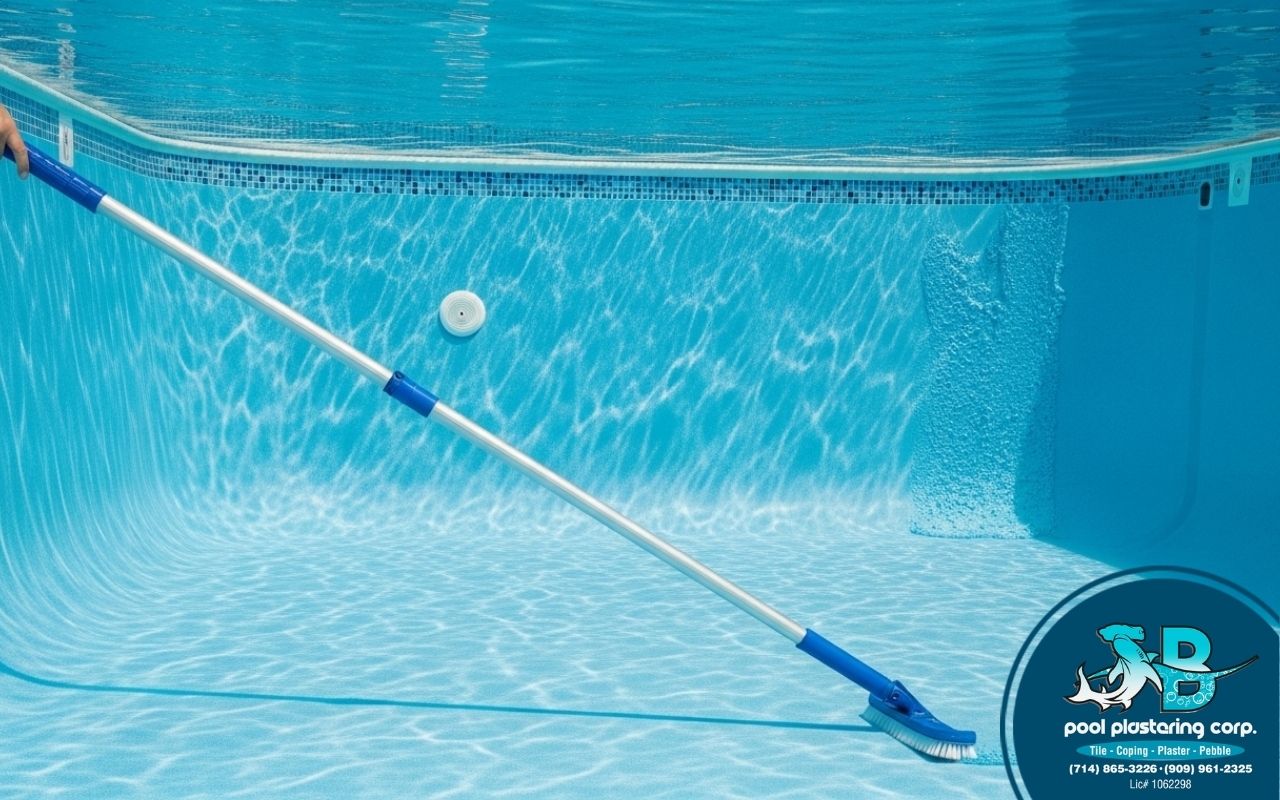
Brushing and vacuuming keep dirt from settling into the finish. Therefore, they are key parts of pool plaster care. A soft brush helps protect the surface while lifting debris from walls, floors, and tight corners.
- Brush the pool at least once a week.
- Focus on corners, steps, and shaded spots.
- Use a plaster-safe brush with soft bristles.
- Vacuum after brushing to remove loose debris.
In addition, regular brushing helps stop algae from taking hold. That means less staining and less heavy chemical use. As a result, your pool looks brighter and feels more pleasant.
JB Pool Plastering wants every pool owner to enjoy a smooth, clean finish. When brushing no longer fixes roughness, Contact Us so we can inspect the surface with you.
Monitor Water Level To Support Better Circulation
Water level also affects your plaster and equipment. If water drops too low, pumps can strain. If it rises too high, skimmers may not work well. So, steady water height helps your whole care routine run better.
Keep the water near the middle of the skimmer opening. After rain or dry weather, check it again. Likewise, steady circulation helps chemicals spread evenly and supports better pool plaster care every day.
At JB Pool Plastering, we know that simple checks protect more than appearance. They also help your system run smoothly, which supports a longer-lasting finish.
Address Stains Early To Preserve A Fresh Look
Stains often start small. However, they can become harder to remove when they sit too long. That is why fast action matters for pool plaster care.
Leaves, algae, metals, and water imbalance can all affect color. So, when you notice a mark, test the water, brush the area, and use the right stain treatment. Then vacuum the loosened residue from the pool.
Early care protects the finish and keeps your pool more attractive. Moreover, it may help you avoid bigger surface work later. JB Pool Plastering encourages homeowners to act early instead of waiting for stains to spread.
Prevent Algae Growth With Simple Seasonal Steps
Algae can cling to plaster and leave your pool looking dull. Therefore, prevention should stay part of your weekly routine. Good circulation, proper sanitizer levels, and regular brushing all work together.
During hot months, check the pool more often. Also, clean the filter and remove debris daily when use is high. Because algae grows fast in warm water, small steps make a big difference.
Pool plaster care becomes much easier when algae never gets the chance to settle. At JB Pool Plastering, we believe prevention saves both effort and money.
Use A Simple Winter Plan For Surface Longevity
When colder months arrive, your pool still needs care. A simple winter plan helps reduce staining, buildup, and avoidable damage. As a result, spring opening feels easier.
Clean the pool well before closing. Lower the water as needed, add winter products, and secure the cover tightly. Then check the cover from time to time and remove standing water or debris.
Pool plaster care does not stop when swimming season ends. Instead, winter care protects the work you did all year. JB Pool Plastering sees this step as one of the easiest ways to support long-term results.
Apply This Easy How To For Weekly Care
If you want a simple routine, follow these steps each week. This how-to plan keeps pool plaster care manageable and clear.
- Skim the pool and empty baskets.
- Test water and adjust chemicals slowly.
- Brush walls, steps, and the waterline.
- Vacuum debris from the floor.
- Check water level and circulation.
- Inspect for stains, rough spots, or cracks.
By following this order, you reduce missed steps. Furthermore, you build a routine that feels simple instead of stressful. If the surface still looks worn, Contact Us for professional support.
Schedule Professional Checks For Longer Lasting Results
Even with great home care, expert inspections still matter. A trained eye can spot hairline cracks, rough patches, or hidden wear before damage grows. Therefore, professional help supports smarter pool plaster care.
At JB Pool Plastering, we recommend pairing your routine with expert review when needed. Our team can help you understand surface condition, finish options, and the right timing for repairs. You can also explore common questions on our FAQ.
JB Pool Plastering believes pool ownership should feel rewarding, not stressful. With steady habits, better water balance, and timely support, pool plaster care becomes easier to manage through every season.
Frequently Asked Questions
How often should I test pool water for plaster protection?
You should test it at least twice each week. This helps you catch changes before they harm the finish. For more help or service support, visit Contact Us.
How long can replastering take when the surface is worn?
Many replastering jobs take a few days, depending on size, finish, repairs, and weather. JB Pool Plastering shares project details before work begins. You can review more details on our FAQ.
Which interior finishes can work well for my pool?
Different finish options can create different looks and textures for your pool. JB Pool Plastering can help you review the best fit for your goals. To learn more, please visit Contact Us.
What signs show that my plaster needs attention?
Watch for stains, rough spots, small cracks, pitting, or dull color. Early action can prevent larger repairs later. You can read more service answers on our FAQ.
When should I ask for professional pool surface help?
You should ask for help when cleaning and balancing no longer solve the issue. JB Pool Plastering can inspect the surface and guide the next step. Start with Contact Us.
References:
The Dos and Don’ts of Swimming Pool Maintenance
Subscribe to Download Pool Maintenance 101 Guide
Fill the Form and Start Taking Care of Your Pool




Contact Us Now
Get Your Pool Quote!